







Destacados
Science Manager, Research Manager, Laboratory Manager, Environmental Science Manager, Biotech Manager, Healthcare Science Manager, Scientific Project Manager, Research and Development Manager, Science Team Leader, Science Department Head, Scientific Operations Manager, Laboratory Operations Manager
Imagine a world where scientific breakthroughs improve health, protect the environment, and advance technology. Natural Sciences Managers make this happen by leading teams that turn research into real-world solutions people rely on every day.
Natural Sciences Managers coordinate and supervise scientists and technicians working on projects in areas like biotechnology, environmental science, and healthcare. They plan research goals, manage resources, ensure safety standards, and communicate progress to stakeholders. These managers collaborate closely with researchers, lab technicians, business leaders, and regulatory agencies to keep projects on track and impactful.
Using project management tools, data analysis software, and specialized scientific equipment, Natural Sciences Managers ensure that research teams work efficiently and produce reliable results. Their leadership is crucial for turning complex scientific ideas into products, policies, or treatments that benefit society and the planet.
- Leading teams that create important scientific discoveries impacting health and the environment.
- Bringing order and focus to complex research projects, making science accessible and actionable.
- Collaborating with diverse experts and guiding innovative problem-solving.
- Playing a key role in turning ideas into practical solutions that improve lives and ecosystems.
Horario de trabajo
Natural Sciences Managers typically work full-time in office and laboratory settings. Their schedule can include long hours during critical project phases or when deadlines approach, especially in research-driven organizations. They may also travel occasionally to conferences, partner sites, or field locations. While many are employed by companies or government agencies, some work as consultants or in academia, which might offer more flexible hours but similar pressures.
Funciones habituales
- Plan and oversee scientific research projects from conception to completion.
- Manage budgets, schedules, and resources to meet project goals efficiently.
- Supervise and mentor scientists, researchers, and laboratory staff.
- Ensure compliance with safety, ethical, and regulatory standards in the lab or field.
- Coordinate collaboration between different scientific departments or external partners.
- Analyze scientific data and prepare reports for stakeholders and decision-makers.
- Implement quality control procedures to maintain research integrity.
- Identify funding opportunities and assist with grant writing or proposals.
- Resolve technical or personnel issues that arise during research activities.
- Stay updated on scientific advancements to guide research directions.
- Organize meetings, presentations, and training sessions for the team.
- Evaluate project outcomes and recommend improvements for future research.
Responsabilidades adicionales
- Develop strategic plans aligning research goals with organizational mission.
- Advocate for science within the organization and to external audiences.
- Negotiate contracts and agreements with suppliers or collaborators.
- Lead efforts in technology transfer and commercialization of research findings.
- Manage intellectual property and patent processes related to research.
- Participate in hiring and performance evaluations of scientific staff.
- Promote a positive and inclusive workplace culture.
- Facilitate cross-disciplinary communication to foster innovation.
A Natural Sciences Manager’s day often starts with reviewing project progress reports and meeting with team leaders to address any challenges or shifts in priorities. They check budgets and timelines to ensure everything is on track.
Midday is usually filled with coordinating between research teams, discussing experimental results, and planning next steps. They might also meet with external partners, funding agencies, or regulatory bodies to align on goals and compliance.
Later in the day, the manager focuses on administrative duties like updating documentation, preparing presentations for executives, and strategizing future research directions. They may also dedicate time to mentoring staff or resolving personnel issues before wrapping up the day.
Habilidades interpersonales
- Liderazgo y motivación del equipo
- Effective communication with diverse audiences
- Resolución de problemas y pensamiento crítico
- Gestión del tiempo y establecimiento de prioridades
- Capacidad de adaptación a las necesidades cambiantes del proyecto
- Resolución de conflictos y negociación
- Strategic planning and vision
- Atención al detalle
- Collaboration and interpersonal skills
- La toma de decisiones bajo presión
- Juicio ético y responsabilidad
- Mentoring and coaching others
Competencias técnicas
- Project management software (e.g., MS Project, Asana)
- Herramientas de análisis y visualización de datos
- Familiarity with scientific equipment and lab protocols
- Budgeting and financial oversight
- Conocimientos sobre el cumplimiento normativo
- Redacción de informes y documentación
- Use of statistical software (e.g., SPSS, R)
- Grant writing and funding acquisition
- Technology commercialization processes
- Quality assurance and control methods
- Biotech Manager: Leads research and development in biotechnology companies focused on medical, agricultural, or industrial applications.
- Environmental Science Manager: Oversees projects aimed at conserving natural resources and addressing environmental challenges.
- Healthcare Science Manager: Directs scientific research supporting healthcare innovations and clinical studies.
- Laboratory Manager: Manages daily lab operations, safety protocols, and equipment maintenance.
- Research Project Manager: Focuses on the planning and execution of specific scientific studies or experiments.
- Regulatory Science Manager: Ensures research complies with government and industry regulations.
- Academic Science Manager: Coordinates scientific research and education within universities or research institutes.
- Consulting Science Manager: Provides scientific expertise and project management to clients across various industries.
- Empresas de biotecnología
- Empresas farmacéuticas
- Empresas de consultoría medioambiental
- Government research laboratories
- Universidades y centros de investigación académica
- Centros sanitarios y hospitales
- Nonprofit scientific organizations
- Agricultural science companies
- Empresas de fabricación de productos químicos
- Energy sector research departments
- Organizaciones de investigación por encargo (CRO)
- Science and technology startups
Natural Sciences Managers often face tight deadlines and pressure to deliver accurate, impactful results that can influence public health or environmental policies. Mistakes or delays can have serious consequences, so attention to detail and stress management are essential.
Their work hours can extend beyond the typical 9-to-5, especially when coordinating multiple projects or responding to unexpected research challenges. Balancing administrative duties with hands-on scientific oversight can be demanding.
Managers must navigate complex interpersonal dynamics, balancing the needs of scientists, executives, and external partners. They may need to make difficult decisions about resource allocation or project direction, requiring resilience and strong ethical judgment.
- Growing emphasis on interdisciplinary research combining biology, chemistry, and data science.
- Increased use of artificial intelligence and machine learning to analyze scientific data.
- Remote collaboration tools enabling global scientific teams to work together.
- Rising importance of sustainability and environmental impact in research priorities.
- Greater integration of regulatory compliance early in project design phases.
- Expansion of personalized medicine influencing healthcare research management.
- Use of automation and robotics in laboratories to increase efficiency.
- Focus on diversity, equity, and inclusion within scientific teams.
- Greater demand for science communication skills to engage public and stakeholders.
- Shift towards open science and sharing data to accelerate innovation.
Many Natural Sciences Managers enjoyed exploring nature, conducting science experiments, or building models as kids. They were curious about how things work and liked organizing group projects or science fairs.
They often showed early leadership qualities by mentoring peers in science clubs or leading team activities. Their love for problem-solving and learning made science and technology exciting playgrounds for their creativity.
Becoming a Natural Sciences Manager usually starts with a strong foundation in science through a bachelor’s degree in fields like biology, chemistry, environmental science, or healthcare-related disciplines. Many managers pursue advanced degrees or certifications in management, business administration, or specialized scientific fields to enhance their leadership skills.
Los estudiantes pueden cursar asignaturas relacionadas con temas como:
- Biology and Chemistry
- Ciencias Ambientales
- Physics and Earth Science
- Mathematics and Statistics
- Research Methods and Experimental Design
- Gestión de proyectos
- Administración de Empresas
- Technical Writing and Communication
- Data Analysis and Visualization
- Ethics in Science
Hands-on experience through internships, laboratory work, or research assistant roles is crucial to develop practical skills and understand scientific workflows. Building a portfolio of projects and gaining leadership experience prepares candidates for managerial roles. On-the-job training and mentorship help refine management techniques and industry-specific knowledge.
- Take advanced science courses like biology, chemistry, and environmental science in high school.
- Participate in science clubs, fairs, or research competitions to gain practical experience.
- Develop strong math and computer skills to analyze data effectively.
- Seek internships or volunteer opportunities in laboratories or research centers.
- Practice communication skills through presentations and writing assignments.
- Explore leadership roles in school organizations or teams.
- Attend summer science camps or workshops to deepen scientific knowledge.
- Research colleges with strong science programs and management opportunities.
- Consider dual degrees or minors in business or management.
- Network with professionals through job shadowing or informational interviews.
- Choose programs with hands-on laboratory and research components.
- Look for courses that combine science with management or project leadership training.
- Ensure the program offers internships or co-op placements in scientific settings.
- Select schools with strong connections to industry or research organizations.
- Seek mentors among faculty who have real-world science management experience.
- Prioritize programs that teach communication and teamwork skills.
- Consider programs accredited by scientific or management professional bodies.
- Look for opportunities to participate in interdisciplinary projects.
- Find programs that emphasize ethics and regulatory compliance.
- Choose institutions supporting diversity and inclusion in STEM fields.
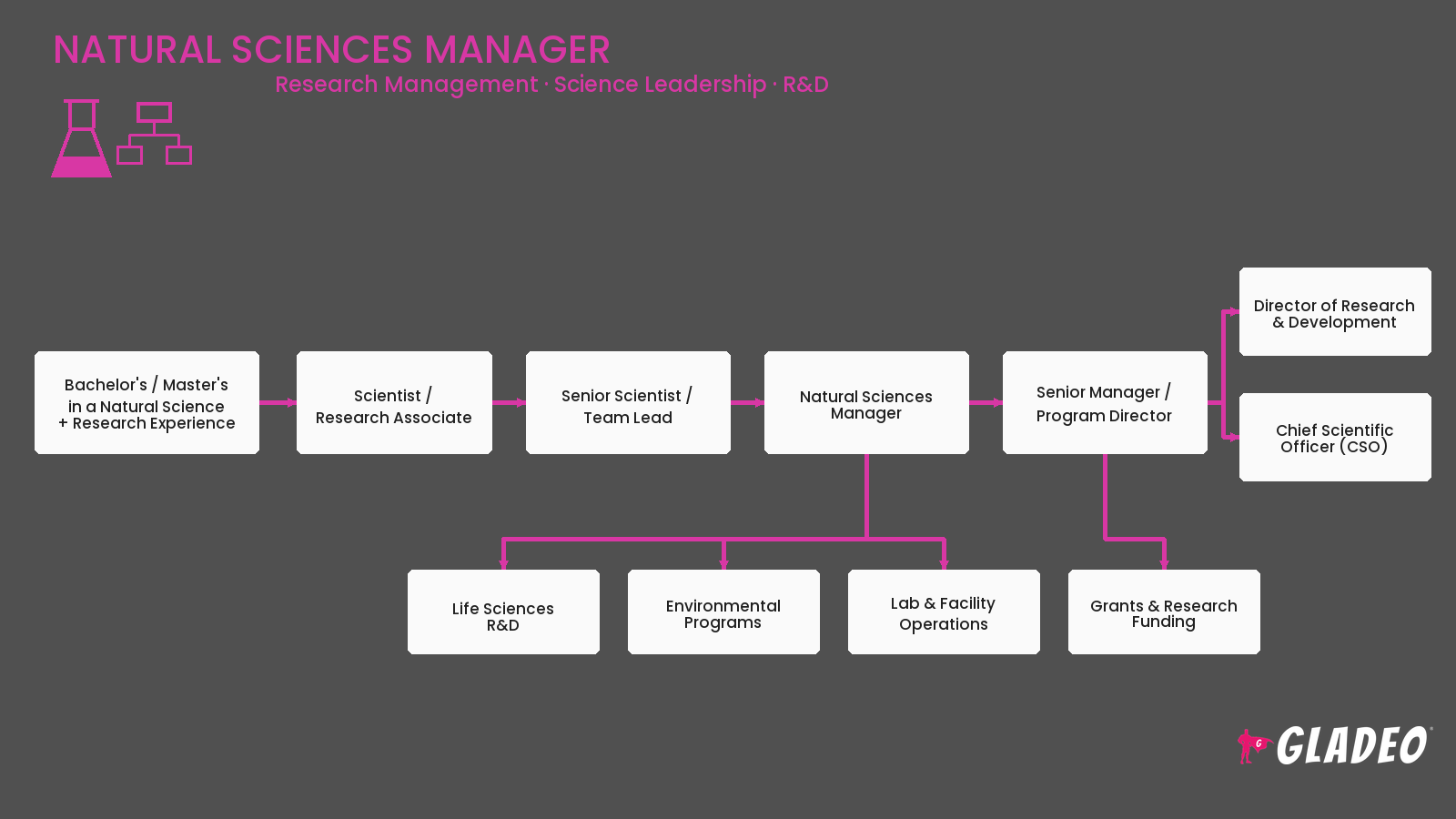
- Apply for research assistant or laboratory technician positions to gain practical science experience.
- Seek internships or entry-level roles at biotech or environmental firms.
- Volunteer for project coordination or administrative support roles in scientific organizations.
- Build a professional portfolio showcasing your contributions to research projects.
- Attend industry networking events and career fairs to connect with professionals.
- Develop proficiency in scientific software and data analysis tools.
- Practice effective communication by presenting research findings.
- Ask for mentorship from experienced managers or scientists.
- Stay current with industry news and trends through journals and websites.
- Pursue certifications in project management or laboratory safety.
- Demonstrate leadership by organizing team meetings or training sessions.
- Prepare for interviews by understanding the company’s research focus and challenges.
- Gain experience managing small projects or teams to build leadership skills.
- Pursue advanced degrees or certifications in science management or business administration.
- Expand your professional network through conferences and industry groups.
- Take on responsibilities in budgeting, compliance, or technology transfer.
- Develop expertise in emerging scientific fields relevant to your organization.
- Seek feedback and mentorship to improve management style and effectiveness.
- Lead cross-departmental initiatives to enhance collaboration.
- Stay adaptable to evolving technologies and research priorities.
Páginas web:
- American Society for Biochemistry and Molecular Biology (asbmb.org)
- Society for Laboratory Automation and Screening (slas.org)
- Environmental Science and Technology (envsci.org)
- Project Management Institute (pmi.org)
- National Association of Science Writers (nasw.org)
- Organización para la Innovación en Biotecnología (bio.org)
- Association for Women in Science (awis.org)
- Sociedad Química de Estados Unidos (acs.org)
- International Society for Environmental Epidemiology (iseepi.org)
- Science Careers by AAAS (sciencecareers.org)
- Lab Manager Magazine (labmanager.com)
- Society for Industrial Microbiology and Biotechnology (sim.org)
- Scientific American (scientificamerican.com)
- ResearchGate (researchgate.net)
Libros:
- Managing Scientists: Leadership Strategies in Research and Development by Alice M. Sapienza
- The Science of Managing Scientific Teams by D. Scott Decker
- Project Management for Research: A Guide for Science and Engineering by Adedeji B. Badiru
- Leadership in Science and Technology: A Reference Handbook by Joel A. C. Baum
- The Art of Scientific Management by Sarah L. Johnson
If managing scientific research isn't your perfect fit, many related careers allow you to leverage your science knowledge and leadership skills in other ways.
- Investigador científico
- Técnico de laboratorio
- Analista de control de calidad
- Consultor medioambiental
- Administrador sanitario
- Divulgador científico
- Especialista en asuntos reglamentarios
- Coordinador de proyectos
- Analista de datos
- Biotech Sales Representative
Haz clic aquí para descargar la infografía
Sección de noticias

Ofertas de empleo destacadas
Cursos y herramientas en línea