






Destacados
Product Chemist, Pharmaceutical Chemist, Analytical Chemist, Cosmetic Chemist, Industrial Chemist, Research Chemist, Chemical Formulator, Development Chemist, Quality Control Chemist, Materials Chemist, Synthetic Chemist, Formulation Scientist
Every product you use daily—from the lotion that soothes your skin to the medicine that heals you—relies on the expertise of Formulation Chemists to make sure it’s safe, effective, and high-quality. These scientists create the perfect blend of ingredients that deliver the results consumers expect and trust.
Formulation Chemists spend their days designing, testing, and refining mixtures of chemicals to develop new products or improve existing ones. They collaborate with research teams, quality control experts, and manufacturing staff to ensure formulations meet safety standards, perform well, and can be produced efficiently. Their work results in products ranging from pharmaceuticals and personal care items to industrial materials and food additives.
Using advanced lab equipment, computer modeling, and chemical analysis techniques, Formulation Chemists identify the ideal combination of ingredients for stability, texture, and effectiveness. Their role is critical because the right formula not only impacts product performance but also consumer safety and satisfaction, making their work a cornerstone of innovation in healthcare and manufacturing.
- Creating products that improve people’s health and daily lives feels deeply fulfilling.
- Solving complex chemical puzzles and seeing your formulation succeed is intellectually rewarding.
- Collaborating with scientists, engineers, and business teams builds valuable skills and relationships.
- Watching a product move from concept to store shelves thanks to your work is incredibly exciting.
Horario de trabajo
Formulation Chemists typically work full-time in laboratory or office settings, often during regular business hours. Deadlines can mean occasional extended hours or weekend work, especially when projects approach critical testing or production phases. Many work as part of research and development teams within companies, but some may work in consulting or contract roles, balancing lab work with meetings and data analysis.
Funciones habituales
- Design and develop chemical formulations for new or improved products.
- Conduct laboratory experiments to test formulation stability, safety, and performance.
- Analyze test data using chromatography, spectroscopy, and other chemical analysis methods.
- Collaborate with cross-functional teams including R&D, quality assurance, and manufacturing.
- Ensure formulations comply with regulatory guidelines and industry standards.
- Troubleshoot and adjust formulas based on test results or production feedback.
- Document formulation procedures, test results, and product specifications.
- Support scale-up of formulations from lab to pilot and full production.
- Realizar el mantenimiento del equipo de laboratorio y garantizar que se cumplan los protocolos de seguridad.
- Research new ingredients and technologies to incorporate into formulations.
- Participate in patent applications or intellectual property protection efforts.
- Assist in preparing technical reports and presentations for stakeholders.
Responsabilidades adicionales
- Stay updated with industry regulations and scientific advances.
- Train junior chemists or lab technicians on formulation techniques.
- Support quality control by investigating product complaints or deviations.
- Help develop sustainable or eco-friendly formulations.
- Contribute to cost analysis and sourcing of raw materials.
- Engage with suppliers to understand ingredient properties and availability.
- Participate in product launch planning and marketing support.
- Attend scientific conferences and workshops to network and learn.
Morning often begins by reviewing experimental data from previous formulations and planning new tests based on those results. Chemists check lab schedules, prepare materials, and set up equipment for upcoming experiments.
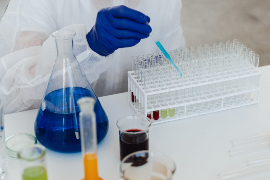
Midday involves hands-on lab work where chemists mix ingredients, run tests for stability or efficacy, and analyze samples using instruments like spectrometers or chromatographs. They collaborate with team members to troubleshoot issues or brainstorm formulation improvements.
Afternoons are usually spent documenting findings, updating databases, and meeting with R&D, manufacturing, or regulatory teams to discuss progress and next steps. Deadlines may prompt extra effort to finalize data or prepare presentations for management or clients.
Habilidades interpersonales
- Atención al detalle
- Mentalidad orientada a la resolución de problemas
- Buena comunicación
- Colaboración en equipo
- Gestión del tiempo
- Capacidad de adaptación
- Pensamiento crítico
- Creatividad
- Paciencia
- Capacidad de organización
- Curiosidad
- Fiabilidad
Competencias técnicas
- Chemical analysis techniques (HPLC, GC, spectroscopy)
- Laboratory safety procedures
- Formulation design and testing
- Análisis e interpretación de datos
- Knowledge of regulatory requirements
- Use of lab instruments and equipment
- Scientific documentation and reporting
- Computer modeling for formulations
- Raw material sourcing and evaluation
- Procesos de control de calidad
- Pharmaceutical Formulation Chemist: Develops drug formulations ensuring efficacy and patient safety.
- Cosmetic Formulation Chemist: Creates personal care products like skincare and makeup with desired textures and effects.
- Industrial Formulation Chemist: Designs chemical products for manufacturing, like adhesives or coatings.
- Food Formulation Chemist: Develops additives and flavorings to improve taste, texture, and shelf life.
- Analytical Formulation Chemist: Focuses on testing and analyzing formulations to ensure quality and compliance.
- Research and Development Chemist: Explores new chemical combinations and innovative product ideas.
- Regulatory Formulation Chemist: Ensures all formulations meet legal and safety standards before release.
- Sustainable Formulation Chemist: Works on eco-friendly formulas using biodegradable or renewable ingredients.
- Empresas farmacéuticas
- Cosmetics manufacturers
- Empresas de biotecnología
- Empresas del sector de la alimentación y las bebidas
- Chemical manufacturing plants
- Research laboratories
- Organismos reguladores del Gobierno
- Healthcare product companies
- Environmental testing labs
- Contract formulation service providers
- Instituciones de investigación académica
- Agricultural chemical companies
Formulation Chemists often face tight deadlines to develop or improve products, which can create pressure to balance thorough testing with speed. The need for precision means mistakes can be costly or dangerous, so attention to detail is critical.
Work hours are generally standard but can extend during critical project phases or product launches. Lab work requires standing for long periods and careful handling of chemicals, sometimes involving exposure to hazardous materials with strict safety protocols.
The role demands persistence through trial and error since many formulations require multiple rounds of testing and adjustments. Chemists must be comfortable with iterative processes and continuous learning, often juggling multiple projects simultaneously.
- Increased focus on green chemistry and sustainable formulations.
- Use of artificial intelligence and machine learning to optimize formulations faster.
- Development of personalized and targeted products, especially in healthcare and cosmetics.
- Integration of nanotechnology for enhanced product performance.
- Advancements in analytical instrumentation for more precise testing.
- Shift towards biodegradable and natural ingredients to meet consumer demand.
- Greater regulatory scrutiny leading to more detailed documentation and compliance work.
- Remote lab monitoring and digital collaboration tools becoming more common.
- Growing importance of data analytics in product development.
- Cross-disciplinary teams combining chemistry with biology, materials science, and engineering.
Many Formulation Chemists showed early interest in science experiments, mixing household items, or exploring how products like soaps and lotions worked. They often enjoyed chemistry classes and hands-on lab activities that let them create and test new mixtures.
Curiosity about solving problems and making things better was common, along with a knack for detail and patience in testing results. These individuals liked puzzles and projects that combined creativity with scientific method, setting the stage for a career in chemical formulation.
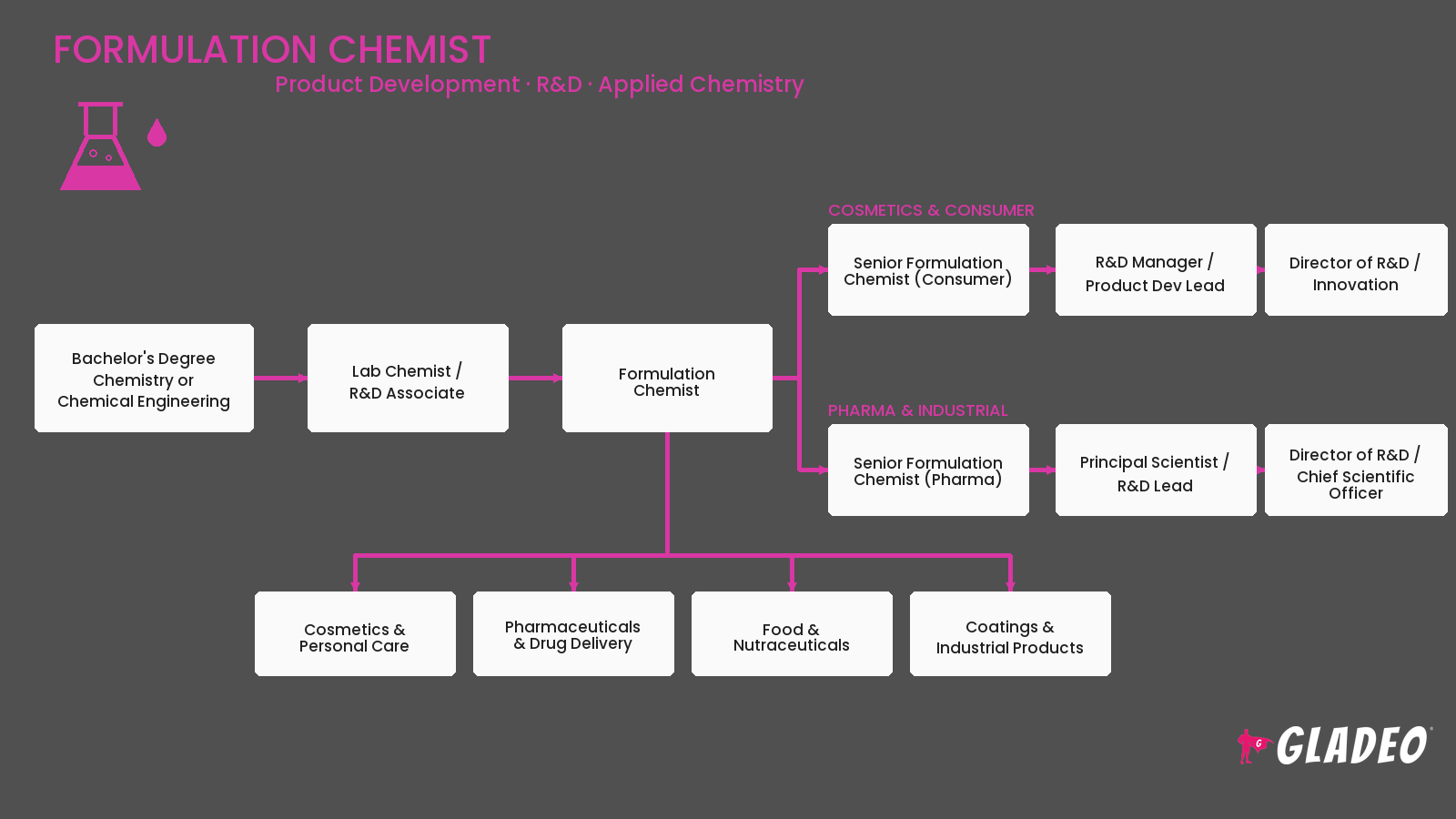
Becoming a Formulation Chemist generally requires a bachelor’s degree in chemistry, chemical engineering, pharmaceutical sciences, or a related field. Advanced degrees can open doors to specialized roles and research opportunities. Practical lab experience and internships are key to developing hands-on skills.
Los estudiantes pueden cursar asignaturas relacionadas con temas como:
- Química general
- Química orgánica
- Química analítica
- Química física
- Chemical Engineering Basics
- Pharmaceutical Sciences
- Ciencia de los materiales
- Bioquímica
- Técnicas de laboratorio
- Control y garantía de calidad
Students benefit from building a strong portfolio of lab projects and research experiences during college. Internships or cooperative education programs provide real-world exposure and networking opportunities. Many Formulation Chemists continue learning on the job through workshops and professional development.
- Take advanced science courses, especially chemistry and biology.
- Participate in science clubs or competitions.
- Develop strong math skills, including algebra and statistics.
- Seek out internships or summer programs in labs or companies.
- Learn to use basic lab equipment safely and accurately.
- Practice writing clear scientific reports and presentations.
- Explore computer skills, including data analysis and modeling software.
- Attend career fairs and talk to professionals in chemistry fields.
- Join STEM organizations or clubs to build teamwork and leadership.
- Research colleges with strong chemistry or pharmaceutical programs.
- Consider dual majors or minors in related fields like biology or engineering.
- Look for schools offering co-op or internship opportunities in formulation.
- Choose accredited programs with strong chemistry and lab components.
- Look for schools with partnerships to pharmaceutical or manufacturing companies.
- Seek programs offering hands-on formulation labs and real product development projects.
- Check if the curriculum covers regulatory affairs and quality control.
- Consider programs with research opportunities or faculty active in formulation science.
- Evaluate availability of internships or cooperative education in industry settings.
- Find programs that teach modern instrumentation and data analysis techniques.
- Look for courses emphasizing sustainable and green chemistry.
- Assess faculty expertise in your area of interest, like cosmetics or pharmaceuticals.
- Ensure access to up-to-date lab facilities and equipment.
- Check if the program supports professional certification preparation.
- Consider class sizes and opportunities for personalized mentorship.
- Apply for internships or entry-level lab technician roles in pharmaceutical, cosmetic, or chemical companies.
- Build a strong resume highlighting lab experience and coursework.
- Create a portfolio documenting projects, experiments, and any product development.
- Network with professors, industry professionals, and at career fairs.
- Prepare for interviews by practicing technical questions and explaining your passion for formulation.
- Seek mentorship from experienced chemists or supervisors.
- Be willing to start in quality control or support roles to gain industry knowledge.
- Stay curious and volunteer for diverse projects to expand your skills.
- Develop proficiency in lab instruments and data analysis software.
- Keep learning about new ingredients and formulation methods.
- Attend industry workshops and seminars to build connections.
- Demonstrate reliability and attention to detail in all tasks.
- Pursue advanced degrees or certifications to specialize and increase responsibility.
- Gain experience managing projects and mentoring junior staff.
- Build relationships across departments like manufacturing, marketing, and regulatory affairs.
- Stay current with emerging technologies and industry regulations.
- Take leadership roles in professional organizations or company initiatives.
- Publish research findings or file patents to establish expertise.
- Move into roles like senior formulation chemist, project leader, or product development manager.
- Consider transitioning into regulatory affairs, quality assurance, or technical sales roles for career growth.
Páginas web:
- Sociedad Química de Estados Unidos (acs.org)
- Society of Cosmetic Chemists (scconline.org)
- Pharmaceutical Research and Manufacturers of America (phrma.org)
- International Society for Pharmaceutical Engineering (ispe.org)
- Chemical & Engineering News (cen.acs.org)
- The Chemist's Companion (chemistscompanion.com)
- Society of Chemical Manufacturers & Affiliates (scma.org)
- National Institute for Occupational Safety and Health (cdc.gov/niosh)
- Formulation & Development Magazine (formulationmag.com)
- American Association of Pharmaceutical Scientists (aaps.org)
- European Federation for Cosmetic Ingredients (efci.org)
- Instituto de Tecnólogos Alimentarios (ift.org)
- Society for Applied Spectroscopy (sasweb.org)
- Lab Manager Magazine (labmanager.com)
Libros:
- Pharmaceutical Formulation: A Practical Guide by Mark Gibson
- Handbook of Cosmetic Science and Technology by André O. Barel, Marc Paye, and Howard I. Maibach
- Formulation and Function of Cosmetics by M. N. Berthold and A. W. Knight
- Chemical Formulation: Principles and Practice by John E. McGrath
- Applied Pharmaceutical Formulation by C. R. Ray and K. R. Morris
If becoming a Formulation Chemist isn’t the right fit, there are several related careers where your chemistry skills and creativity can still shine.
- Analytical Chemist
- Quality Control Specialist
- Representante comercial farmacéutico
- Ingeniero químico
- Especialista en asuntos reglamentarios
- Investigador científico
- Científico especializado en materiales
- Product Development Specialist
- Toxiólogo
- Environmental Chemist
Sección de noticias

Ofertas de empleo destacadas
Cursos y herramientas en línea