


Destacados
Wine Scientist, Viticulturist, Wine Chemist, Enology Specialist, Fermentation Scientist, Wine Production Manager, Oenologist, Wine Quality Analyst, Wine Consultant, Cellar Master, Wine Microbiologist, Sensory Analyst
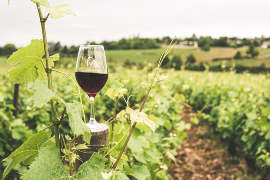
From the moment you sip a glass of wine, the subtle flavors, aromas, and textures you experience are the result of a skilled Enologist’s expertise behind the scenes. These experts ensure every bottle delivers the perfect balance and quality that wine lovers crave.
Enologists oversee the entire winemaking process, from analyzing grape quality and fermentation to testing chemical components and guiding aging techniques. They collaborate daily with vineyard managers, fermentation technicians, cellar workers, and marketing teams to create wines that meet both scientific standards and consumer expectations.
Using advanced laboratory equipment and sensory analysis tools, Enologists monitor yeast activity, acidity, sugar levels, and other chemical markers. Their work is crucial in crafting wines that are safe, delicious, and consistent, making them essential to the success of vineyards and wineries worldwide.
- Transforming raw grapes into complex, enjoyable wines that tell a story of place and craft.
- Working at the intersection of science and art, blending chemistry with creativity to influence flavor profiles.
- Contributing directly to products that bring people together and enhance celebrations.
- Seeing the impact of your expertise in bottles enjoyed by wine enthusiasts globally.
Horario de trabajo
Enologists often work full-time in winery environments, which can include early mornings and weekends during harvest season when grapes are picked and fermentation is critical. The job mixes time in laboratories, vineyards, and production floors, with deadlines tied to fermentation cycles and wine release schedules. Many work for wineries, research institutions, or wine consulting firms, balancing routine testing with seasonal busy periods.
Funciones habituales
- Conduct chemical and microbiological tests on grape juice and wine samples.
- Monitor fermentation processes to ensure proper yeast activity and prevent spoilage.
- Analyze acidity, sugar content, tannins, and alcohol levels throughout production.
- Collaborate with vineyard managers to assess grape quality and harvest timing.
- Develop and adjust winemaking techniques to improve flavor, clarity, and stability.
- Record detailed data to support quality control and compliance with safety standards.
- Assist in blending different batches to achieve desired taste profiles.
- Train cellar staff on best practices for handling and storage.
- Evaluate new technologies and equipment to optimize production.
- Report findings to winery management and suggest improvements.
- Participate in sensory tastings to correlate lab results with flavor.
- Ensure compliance with government regulations and labeling laws.
Responsabilidades adicionales
- Research new yeast strains and fermentation methods.
- Advise marketing teams on product characteristics and consumer trends.
- Manage inventory of chemicals and laboratory supplies.
- Coordinate with regulatory agencies during inspections.
- Develop sustainability initiatives to reduce environmental impact.
- Host or participate in wine tasting events and educational workshops.
- Document production protocols for training and quality assurance.
- Troubleshoot production issues during vintages.
Morning often starts in the lab, reviewing overnight fermentation data and testing new samples to check progress and detect any issues early.
Midday involves meetings with vineyard managers or production staff to discuss grape condition, fermentation schedules, or adjustments needed based on test results.
Afternoon focuses on sensory evaluations, blending trials, and documenting findings. As harvest peaks, evenings might include supervising cellar operations or responding to urgent production needs.
Habilidades interpersonales
- Atención al detalle
- Pensamiento crítico y resolución de problemas
- Comunicación y colaboración
- Paciencia y capacidad de adaptación
- Gestión del tiempo
- Curiosidad y ganas de aprender
- Capacidad de observación
- Creativity in blending and experimentation
- Toma de decisiones
- Trabajo en equipo
- Gestión del estrés
- Enfoque centrado en el cliente
Competencias técnicas
- Chemical analysis and lab testing
- Microbiology of fermentation
- Sensory evaluation techniques
- Data recording and interpretation
- Use of chromatography and spectrometry
- Understanding of viticulture basics
- Knowledge of fermentation science
- Quality control protocols
- Cumplimiento normativo
- Blending and wine stabilization methods
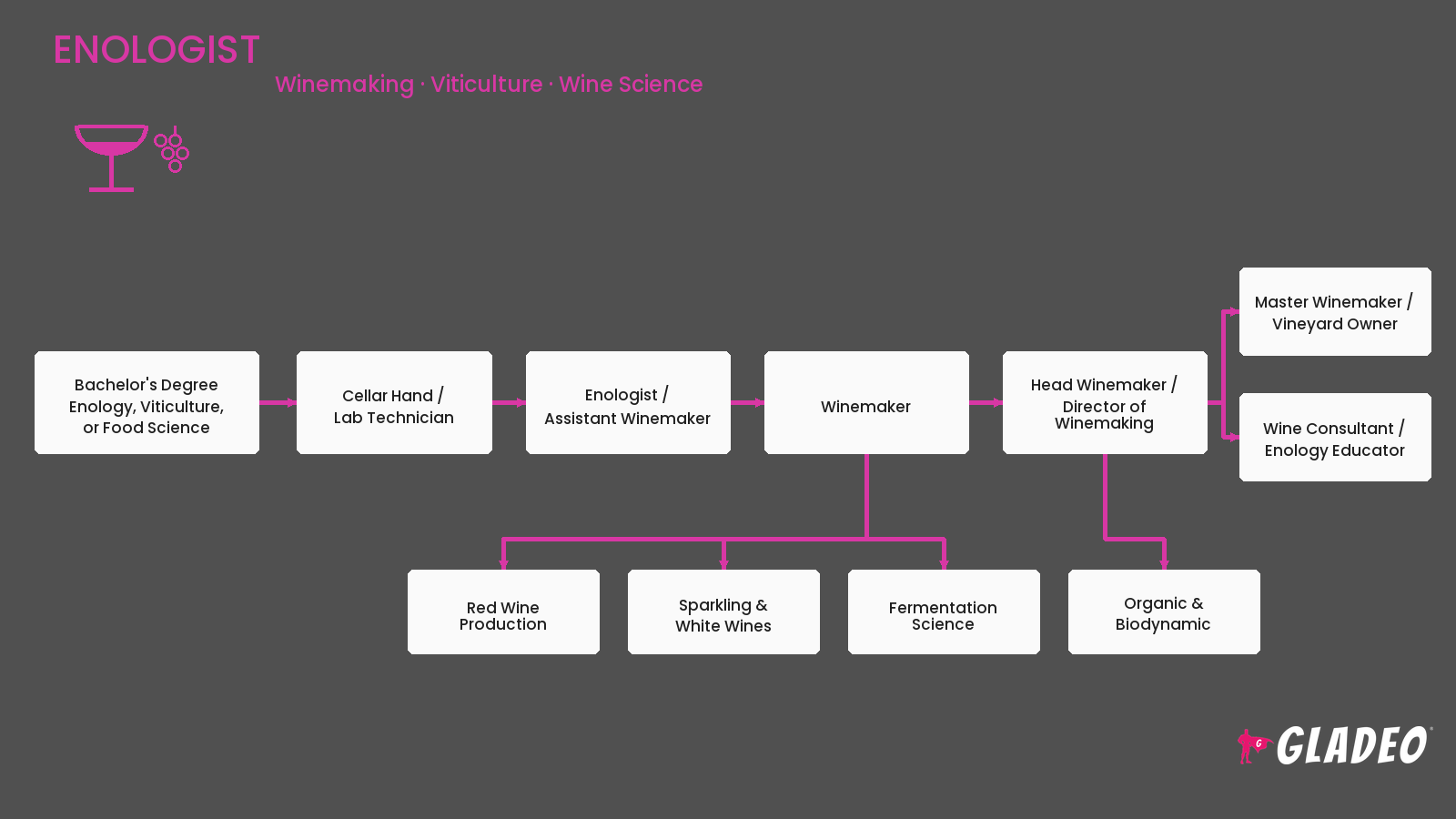
- Research Enologist: Focuses on developing new winemaking techniques and studying fermentation science.
- Production Enologist: Manages day-to-day winemaking and quality control in wineries.
- Consulting Enologist: Provides expert advice to multiple wineries on production and quality improvement.
- Sensory Analyst: Specializes in tasting and evaluating wine characteristics.
- Quality Assurance Enologist: Ensures products meet safety and quality standards.
- Viticulture Specialist: Works closely with grape growers to optimize fruit quality for winemaking.
- Wine Microbiologist: Studies yeast and bacterial activity affecting wine.
- Sustainability Enologist: Develops eco-friendly processes in vineyards and wineries.
- Wineries and Vineyards
- Wine Cooperatives
- Agricultural Research Institutes
- Food and Beverage Companies
- Wine Consulting Firms
- Government Agricultural Departments
- University Research Labs
- Wine Certification Bodies
- Quality Control Laboratories
- Wine Marketing and Sales Companies
- Enology Equipment Manufacturers
- Trade Associations
Enologists face intense pressure during harvest seasons when timing is critical and mistakes can affect entire vintages. They must remain vigilant to prevent spoilage and maintain quality under tight deadlines.
Work hours can be irregular, often including early mornings, weekends, and long days in both lab and production environments. Physical demands include standing for long periods and handling heavy equipment or barrels.
The role requires continuous learning to keep up with evolving winemaking science, regulatory changes, and consumer preferences. Mistakes can be costly, so precision and consistency are vital.
- Growing use of advanced analytics and sensors for fermentation monitoring.
- Increased focus on sustainable and organic winemaking practices.
- Integration of biotechnology for yeast and bacteria management.
- Development of non-traditional and experimental wine styles.
- Automation in laboratory testing and production processes.
- Expansion of wine tourism influencing production decisions.
- Greater demand for traceability and transparency in wine origins.
- Use of AI and machine learning for quality prediction.
- Emphasis on climate change adaptation in viticulture.
- Rising consumer interest in natural and low-intervention wines.
Many Enologists showed early interests in science, especially biology and chemistry, as well as a love for nature and plants. They often enjoyed experimenting with food or drinks and had a curiosity about flavors and fermentation.
Young future Enologists may have been involved in gardening, cooking, or science clubs, demonstrating patience and attention to detail. Exposure to wine culture through family or travel also sparked their passion for this career.
Becoming an Enologist typically requires a bachelor’s degree in enology, viticulture, food science, chemistry, or biology. Advanced degrees can open doors to research or consulting roles. Hands-on experience through internships at wineries is crucial to develop practical skills.
Los estudiantes pueden cursar asignaturas relacionadas con temas como:
- Química
- Microbiología
- Food Science
- Fermentation Science
- Biología vegetal
- Sensory Evaluation
- Bioestadística
- Viticulture
- Wine Production Techniques
- Control de calidad
Alongside formal education, building a portfolio of laboratory work and production experience is vital. Many Enologists start with internships or entry-level jobs in wineries to gain real-world skills and grow their professional network.
- Take advanced science courses in chemistry and biology.
- Join agriculture or food science clubs.
- Volunteer or intern at local farms or wineries.
- Attend food and wine science workshops or camps.
- Develop strong math and computer skills.
- Explore chemistry and lab technology classes.
- Participate in science fairs with fermentation or microbiology projects.
- Learn about plant biology and environmental science.
- Practice sensory evaluation with food or drink tasting.
- Build communication skills through presentations and writing.
- Choose programs with hands-on lab and vineyard experience.
- Look for schools with strong partnerships with wineries.
- Seek institutions offering internships or cooperative education.
- Ensure curriculum covers both science and practical winemaking.
- Check for access to modern enology labs and equipment.
- Consider programs with sensory analysis training.
- Find opportunities for research projects in fermentation.
- Look for faculty with industry experience.
- Choose programs that cover sustainability practices.
- Find schools with strong alumni networks in the wine industry.
- Apply for internships at local wineries or vineyards.
- Seek roles as lab assistants or cellar helpers.
- Build a portfolio documenting lab tests and production tasks.
- Attend wine industry events to network with professionals.
- Join professional associations for access to job boards.
- Improve sensory evaluation skills through tastings.
- Practice careful record-keeping and data analysis.
- Volunteer for harvest season work to gain experience.
- Find mentors within winery staff or faculty advisors.
- Develop basic knowledge of winemaking equipment.
- Take continuing education courses on fermentation science.
- Prepare for interviews by studying common enology topics.
- Gain expertise in advanced chemical and microbiological testing.
- Build strong relationships with vineyard and production teams.
- Pursue certifications or advanced degrees in enology or food science.
- Develop leadership skills to manage production or lab teams.
- Stay updated on industry trends and new technologies.
- Expand skills into wine marketing or consulting.
- Publish research or case studies to build reputation.
- Seek roles in larger wineries or international markets.
Páginas web:
- American Society for Enology and Viticulture (ASEV)
- Wine & Spirit Education Trust (WSET)
- Institute of Masters of Wine
- Society of Wine Educators
- The Enology & Viticulture Group
- Wine Business Monthly
- Wine Spectator
- California Association of Winegrape Growers
- International Organisation of Vine and Wine (OIV)
- Wine Institute
- Australian Wine Research Institute
- Wine Science Center
- Journal of Wine Research
- Organización de las Naciones Unidas para la Alimentación y la Agricultura (FAO)
Libros:
- The Science of Wine: From Vine to Glass by Jamie Goode
- Wine Science: Principles and Applications by Ronald S. Jackson
- Understanding Wine Chemistry by David Bird
- Postharvest Technology of Wine Grapes by Yair Y. Marangoni
- The Oxford Companion to Wine by Jancis Robinson
If becoming an Enologist doesn’t work out or if you want to explore related fields, several careers share similar skills and interests in science, agriculture, and food production.
- Viticultor
- Científico especializado en alimentación
- Brewmaster
- Analista de control de calidad
- Científico agrícola
- Microbiólogo
- Sensory Scientist
- Wine Marketing Specialist
- Técnico agrícola
- Bioquímico
Sección de noticias
Ofertas de empleo destacadas
Cursos y herramientas en línea