






Destacados
Certified Art Teacher, Visual Arts Instructor, Licensed Art Educator, Professional Art Educator, Accredited Art Teacher, Credentialed Art Instructor, Visual Arts Facilitator, Certified Fine Arts Educator, Licensed Visual Arts Teacher, Qualified Art Educator
Students dread certain classes, but one class that’s generally loved by all is Art! Art Educators report high job satisfaction because they enjoy teaching a subject students like learning. There’s less stress and more creativity for everyone involved. Some art classes deal with the academic side of things, like art history, but the majority get classrooms involved through hands-on practice.
Unlike typical subjects taught in K-12 settings, such as math, English, or science, there are fewer formal rules or formulas when it comes to teaching art. Instead, Art Educators help learners discover concepts and techniques for creating visual works of art, showing them how to use materials and tools of the trade while encouraging them to explore ideas. Whether its medium is pencil, ink, paint, or even photography, Art Educators must be enthusiastic about the topic and able to pass on that passion. They’re also responsible for instilling a proper understanding of colors, composition, styles, and other important matters relevant to art production.
- Working in a field most teachers (and students) genuinely love
- Helping students discover latent talents
- Watching students develop into budding artists
- Enabling positive learning environments where students can unwind and express themselves, which is good for mental wellness
- Contributing to the future of the wider world of arts
Horario de trabajo
- Arts Educators work full-time jobs during regular school hours. As with any teaching job, there may be after-hours work required to prepare lessons or grade assignments. K-12 teachers can expect off-time as dictated by the academic calendar of holidays and breaks.
Funciones habituales
- Prepare engaging daily lessons and classroom activities
- Review art history to discuss famous and significant works of arts and various styles
- Review elements that pertain to creating visual art, such as lines, 2-D shapes, textures, 3-D forms (i.e., the volume of height, width, and depth), space (perspective), color wheels, and value (i.e., lightness or darkness tones)
- Assign art projects and review instructions with students
- Enseñar el uso adecuado de las herramientas y materiales pertinentes para proyectos específicos
- Guide students along their creative journeys as they explore their own styles
- Poner en marcha proyectos colaborativos que permitan a los grupos trabajar juntos
- Assign and proctor quizzes and exams; grade assignments and offer feedback
- Demonstrate the safe use of hazardous or toxic art supplies, such as glue, paint thinner, scissors, etc.
Responsabilidades adicionales
- Ayudar a los alumnos que tienen dificultades o problemas de aprendizaje
- Encourage and motivate students to express themselves appropriately
- Compartir ideas sobre el plan de estudios con la dirección del centro y el profesorado
- Impart to students the need to take good care of their tools and materials (which can be expensive)
- Enseñar a las clases cómo mantener las zonas de trabajo limpias y organizadas
Habilidades interpersonales
- Deseo y capacidad para ayudar a los demás a alcanzar el éxito
- Empatía y paciencia
- Entusiasmo
- Conciencia social y cultural fundamentada
- Gran capacidad de organización
- Enfoque pedagógico sin prejuicios
- Ingenio
- Habilidades para coordinar e impartir actividades
- Buenas habilidades comunicativas
- La capacidad de supervisar y evaluar el comportamiento de los alumnos
Competencias técnicas
- Knowledge of art history and the elements of creating visual art
- Familiarity with all applicable tools and supplies relevant to the level being taught
- Art and craft supplies may include: various weights and types of paper, canvas, crayons, pastels, charcoal, markers, graphite drawing pencils, sharpeners, colored pencils, ink pens, paintbrushes, trays, thinners, acrylic paint, oil paint, watercolors, tempera, sponges, glue, glue sticks, paste, rubber cement, pom poms, beads, glitter, string, yarn, felt, scissors, rulers, erasers, tape, felt, gloves, and hand cleaners
- Familiarity with classroom presentation equipment (such as video magnifiers, televisions, etc.)
- Conocimientos sobre impresoras, escáneres y fotocopiadoras
- Microsoft Office, aplicaciones de Google, software para Macintosh
- Use of school database systems
- Conocimiento de programas educativos diseñados para alumnos de primaria y secundaria
- Centros educativos públicos y privados de educación primaria y secundaria
- Colegios concertados
- Post-secondary educational institutions (community colleges, universities)
- Youth centers and daycares
Art Educators play crucial roles in the well-rounded social and emotional development of students, from early childhood into high school and beyond. They help instill or grow creative skills and aptitudes that students will use throughout their lives, regardless of their eventual professions or life choices. It can be hard to quantify the tangible benefits that youth acquire from learning about and creating art. Because of that, some teachers (and parents) may not fully appreciate the value of art lessons for students of all ages. Nonetheless, Art Educators must stay positive and press on, confident in the knowledge that their work makes a major, long-lasting (and sometimes life-changing) impact in the lives of every student they teach!
Art Educators may sometimes experience frustration if their STEM (Science, Technology, Engineering, and Mathematics) peers hog more of the limelight. That said, recent years have seen the evolution of STEM into STEAM (Science, Technology, Engineering, Arts and Math) as both the worlds of academia and business realize the vital role that art and creativity play in the development of STEM innovations.
Recent times have seen an increase in the use of technology in the classroom and a rise in distance learning when appropriate for student safety. Art Educators have had to stay flexible and work with these changes, using them to promote the creation of art in exciting new ways (such as making contemporary digital art). Indeed, digital art has been transforming the art scene in recent years, making its way into museums around the globe!
As you guessed by now, most Arts Educators loved creating art growing up. Many had an early aptitude for drawing or painting; others might have discovered art in their teens as an outlet for expressing their ideas, inner thoughts, and occasional turmoils. Although there’s a stereotype about the “restless” artist, a lot of artists are not only quite happy and content but passionate about sharing their enthusiasm with others. This desire to teach is also a trait that might have been developed early on, perhaps through helping younger siblings or classmates.
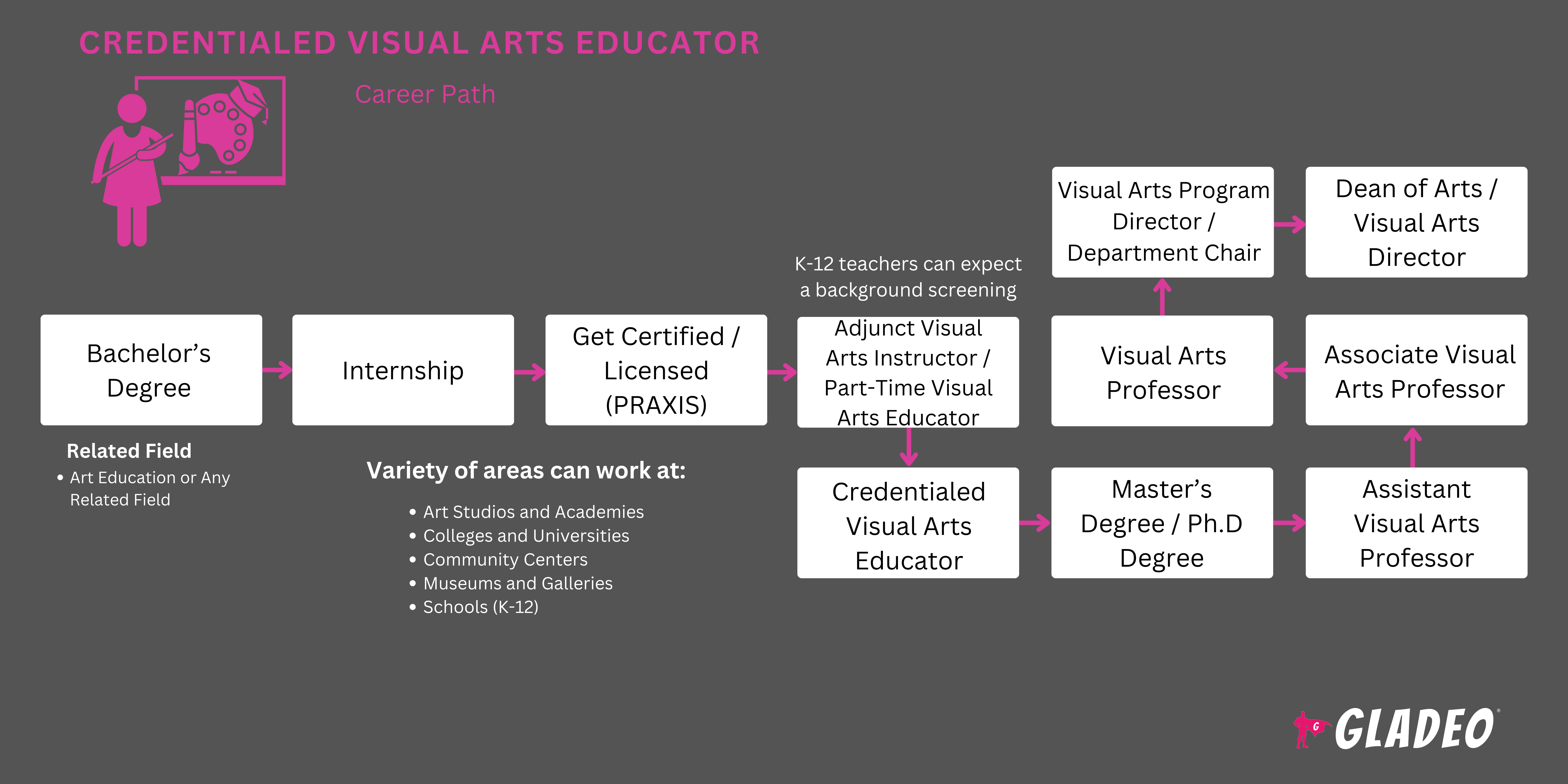
- Like most teachers, Art Educators require a bachelor’s degree with a minimum GPA in a relevant major, such as Art Education
- Students must complete a teacher preparation program as part of their degree
- La mayoría de los programas de formación del profesorado incluyen unas prácticas que permiten adquirir experiencia impartiendo clases a alumnos del curso en el que deseas dar clase.
- Las prácticas suelen realizarse tras los dos primeros años de carrera.
- Students work under the guidance of a trained teacher, who will conduct observations and provide feedback on your teaching efficacy
- After education requirements are finished, you will likely require a state license or certification. In both cases, it is necessary to pass a state-approved exam
- Ten en cuenta que los requisitos varían según el estado y el tipo de centro educativo (público o privado).
- Those who’ve graduated without doing a teaching prep program can earn experience through alternative certification
- The American Board for the Certification of Teacher Excellence offers resources on alternative certification
- You can also check out Teacher Certification Degree’s Alternative Teacher Certification Guide for a full exploration of this topic
- Most states require teachers to pass a Praxis exam. This may include a Core Academic Skills for Educators or only a Praxis Subject Assessment related to art
- Teachers should expect a background screening prior to licensure, which will look at criminal history and potentially credit history
- Some states or employers prefer teachers to obtain a master’s at some point
- Otros requisitos son:
- Sensibilización y compromiso con la diversidad y la igualdad en los centros educativos
- Conocimientos de informática, tabletas, programas ofimáticos y entornos de aprendizaje en línea
- El dominio de una segunda lengua en algunos colegios
- Pruebas de aptitud adicionales, en caso de trabajar con jóvenes con necesidades especiales
- You must ensure your school is regionally accredited and that your program is also accredited by an applicable institution
- Most states won’t grant licensure or certification if your degree is not from a regionally accredited school and a program accredited by the National Council for Accreditation of Teacher Education (NCATE) or the Council for the Accreditation of Educator Preparation (CAEP)
- Always compare costs of tuition, room and board, and scholarship opportunities (in addition to federal financial aid for students)
- Decide which is best for you, a traditional on-campus experience, online courses, or a hybrid program
- Pay close attention to any in-person requirements when signing up for an online degree. You don’t want any surprises after you’ve enrolled!
- Look for programs that publish graduation and job placement statistics. Many schools serve as pipelines for local employers they maintain strong ties with
- Suffice it to say, take plenty of art courses!
- Art Educators also need skills in written and verbal communication, leadership, project management, and teaching pedagogy
- Volunteer at your school to help with projects that build leadership and project management abilities
- Take courses to help you prepare for real-world classroom teaching, such as public speaking, psychology, special education, and behavior management
- Find paid or volunteer opportunities beyond the school, such as working for youth organizations, religious centers, or childcare centers
- Learn about current diversity and social standards in K-12 settings
- Learn to express yourself concisely and clearly. Be comfortable with yourself so that students will feel comfortable in the creative learning environment you build for them!
- Cumple con todos los requisitos académicos y de preparación, incluidas las licencias o certificaciones exigidas por el Estado, los exámenes Praxis, etc.
- Enumera toda tu experiencia laboral, formación académica y actividades extraescolares en tu currículum, que debe estar muy bien redactado y revisado.
- Utiliza resultados cuantificables siempre que sea posible, como estadísticas sobre los resultados positivos y el número de alumnos con los que has trabajado.
- Mantén el contacto con tus antiguos jefes y profesores, incluido tu tutor de prácticas. Estas personas pueden ser unas referencias inestimables cuando llegue el momento.
- Set up job notification alerts on Indeed.com, EdJoin.org, and other job portals and keep track of application deadlines
- Lee atentamente las ofertas de empleo y asegúrate de incluir palabras clave relevantes en tu currículum.
- Demostrar conocimientos y competencia en materia de aprendizaje en línea y otras tendencias
- Know your terminology when it’s time to interview. Keep up-to-date on new Art Education developments
- Let your enthusiasm for teaching art shine! Don’t be afraid to authentically show your passion for the job. Employers want to see evidence of your soft skills as well as academic qualifications
- Earn your master’s degree, or complete additional training/advanced certifications
- Demonstrate sincere caring for children’s educational progress in the arts
- Explore opportunities beyond the walls of your current place of employment and even out-of-state, if necessary to grow
- Build your reputation as a classroom leader with strong management skills
- Mentor others when you can, and offer to help with college students doing their internships
- Participate in professional organization activities (see our list of Recommended Websites below)
- Serve on high-visibility school and district committees; build rapport with staff, peers, parents, and administrators
- Be an advocate for student rights
- Keep students motivated by incorporating new ideas, techniques, and technologies
- Read books, review website resources, watch videos to get new ideas, and keep your classrooms fresh, fun, and forward-thinking!
Páginas web
- Federación Americana de Profesores
- Art Pedagogy
- Art Rabbit
- Arty Factory
- Colossal
- Felt Tip Pen
- Google Arts & Culture
- Asociación Nacional de Educación Artística
- Asociación Nacional de Educación
- Asociación Nacional de Padres y Profesores
- Tate Kids
- The Art Teacher
- The Arty Teacher (YouTube channel)
Libros
- The Art Teacher's Survival Guide for Secondary Schools: Grades 7-12, by Helen D. Hume
- The Art Teacher's Book of Lists, by Helen D. Hume
- Fifty K-12 Art Lessons: Black & White Edition: Creative Differentiated Explorations In Art, by Eric Gibbons
- Classroom Management for Art, Music, and PE Teachers, by Michael Linsin
If becoming an Art Educator isn’t your thing, but you’re still interested in launching a successful career in the education sector, the Bureau of Labor Statistics lists plenty of “Plan B” opportunities to consider! Here are just a few:
- Profesores de inglés como segunda lengua
- Profesores de carrera
- Directores de colegio
- Profesores de infantil y primaria
- Middle School Teachers/Postsecondary Teachers
- Orientadores escolares y profesionales
- Profesores de educación especial
- Ayudantes de profesor
Sección de noticias

Ofertas de empleo destacadas
Cursos y herramientas en línea
Expectativas salariales anuales
Los nuevos trabajadores empiezan con un sueldo de unos 0K $. El sueldo medio es de 0K $ al año. Los trabajadores con mucha experiencia pueden llegar a ganar unos 0K $.
Expectativas salariales anuales
New workers start around $100K. Median pay is $143K per year. Highly experienced workers can earn around $186K.