



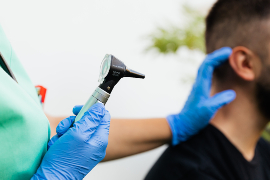


Destacados
Especialista en audición, profesional de la audición, científico especializado en audición, técnico en audiología, audiólogo pediátrico, audiólogo clínico, especialista en audífonos, audiólogo vestibular, técnico en audiología, especialista en habla y audición, especialista en salud auditiva, terapeuta auditivo
Imagina un mundo en el que los sonidos se oyen amortiguados, las conversaciones resultan confusas y los ruidos cotidianos se vuelven abrumadores o desaparecen por completo. Los audiólogos transforman esta realidad devolviendo el don de la audición y el equilibrio, y ayudando a las personas a volver a conectar con el rico tapiz sonoro del mundo.
Los audiólogos diagnostican y tratan los trastornos auditivos y del equilibrio en personas de todas las edades, desde recién nacidos hasta personas mayores. Realizan pruebas de audición, ajustan y programan audífonos, asesoran a los pacientes sobre cómo gestionar la pérdida auditiva y colaboran estrechamente con médicos, logopedas, educadores y familias para desarrollar planes de tratamiento personalizados que mejoren la comunicación y la calidad de vida.
Mediante el uso de equipos y programas informáticos de diagnóstico avanzados, los audiólogos analizan la función auditiva y la salud vestibular. Su experiencia es fundamental no solo para mejorar la audición, sino también para detectar problemas médicos relacionados, aumentar la seguridad y fomentar las relaciones sociales, lo que marca una gran diferencia en la vida cotidiana de los pacientes.
- Ayudamos a los pacientes a recuperar o mejorar su audición, devolviéndoles la capacidad de comunicarse y relacionarse con sus seres queridos.
- Trabajamos en estrecha colaboración con las familias y los equipos sanitarios para ofrecer una atención personalizada que realmente cambie vidas.
- Resolvemos problemas complejos relacionados con la audición y el equilibrio gracias a una tecnología de vanguardia y una atención llena de empatía.
- Ser testigo de la alegría y la sensación de autonomía que experimentan los pacientes cuando vuelven a oír el mundo con claridad.
Horario de trabajo
Los audiólogos suelen trabajar a tiempo completo en entornos clínicos limpios y bien equipados, como hospitales, consultas privadas o colegios. Sus horarios suelen ajustarse al horario diurno habitual, aunque algunos pueden trabajar por las tardes o los fines de semana para adaptarse a las necesidades de los pacientes. A muchos audiólogos les gusta tener una rutina predecible, pero también deben gestionar los plazos derivados de las citas y los casos urgentes, especialmente en entornos sanitarios o de rehabilitación.
Funciones habituales
- Realizar evaluaciones auditivas utilizando audiómetros y otras herramientas de diagnóstico.
- Evaluar el equilibrio y la función vestibular mediante pruebas especializadas.
- Colocar, programar y ajustar audífonos y dispositivos de ayuda auditiva.
- Informar a los pacientes y a sus familias sobre la prevención y el tratamiento de la pérdida auditiva.
- Elaborar y poner en práctica planes de tratamiento adaptados a las necesidades individuales de cada paciente.
- Colaborar con otorrinolaringólogos, logopedas y educadores.
- Llevar registros detallados de los pacientes e informes de evolución.
- Realizar pruebas de detección de problemas auditivos a los recién nacidos y a los niños en edad escolar.
- Asesorar a los pacientes sobre estrategias de afrontamiento y técnicas de comunicación.
- Mantente al día de los avances en tecnología e investigación en audiología.
Responsabilidades adicionales
- Participa en programas de divulgación comunitaria y de educación sobre la salud auditiva.
- Formar y supervisar a los auxiliares o técnicos de audiología.
- Gestionar el inventario y el mantenimiento de los audífonos y el equipo auditivo.
- Defender el acceso de los pacientes a la atención sanitaria auditiva y a las tecnologías de apoyo.
- Contribuir a la investigación sobre los trastornos auditivos y las innovaciones en su tratamiento.
- Ayudar a los pacientes con tinnitus y trastornos del equilibrio mediante terapias especializadas.
- Garantizar el cumplimiento de la normativa sanitaria y las normas de privacidad.
- Ofrecer peritaje o asesoramiento en casos judiciales o laborales relacionados con la pérdida auditiva.
La jornada de un audiólogo suele comenzar con la revisión de los historiales de los pacientes y la preparación del equipo de pruebas. Puede que empiece con pruebas de detección de problemas auditivos en recién nacidos o con citas de seguimiento para ajustar los audífonos. Dedicar tiempo a comprender las necesidades de cada paciente ayuda a adaptar el enfoque para obtener un diagnóstico preciso.
La jornada de mediodía consiste en realizar evaluaciones detalladas de la audición y el equilibrio mediante dispositivos especializados, interpretar los resultados de las pruebas y comentar las conclusiones con los pacientes y sus familias. Los audiólogos dedican una parte importante de su tiempo a asesorar e informar a los pacientes sobre su afección y las opciones de tratamiento.
Las tardes las dedican a ajustar los audífonos, programar los dispositivos y colaborar con otros profesionales sanitarios para coordinar los planes de atención. También pueden actualizar los historiales de los pacientes y participar en actividades de formación continua o de educación comunitaria antes de dar por terminada la jornada.
Habilidades interpersonales
- Empatía y escucha activa para comprender las dificultades de los pacientes.
- Excelentes habilidades comunicativas para explicar con claridad información compleja.
- Paciencia y sensibilidad a la hora de trabajar con niños y pacientes de edad avanzada.
- Actitud orientada a los detalles para realizar pruebas y llevar registros con precisión.
- Capacidad para resolver problemas con el fin de adaptar los tratamientos a las necesidades individuales.
- Capacidades de colaboración para trabajar con equipos sanitarios y familias.
- Capacidad de adaptación a las nuevas tecnologías y a los métodos de tratamiento en constante evolución.
- Competencia cultural para atender de forma eficaz a poblaciones diversas.
- Resiliencia emocional para apoyar a los pacientes que se enfrentan a cambios en sus vidas.
- Capacidad de organización para gestionar citas y documentación.
- Capacidad docente para orientar a los pacientes en el uso de dispositivos y estrategias.
- Pensamiento crítico para interpretar los datos de las pruebas y los signos clínicos.
Competencias técnicas
- Dominio del manejo de equipos de pruebas audiométricas, como audiómetros y timpanómetros.
- Conocimientos sobre tecnologías de audífonos y software de programación.
- Capacidad para realizar pruebas vestibulares, como la videonistagmografía.
- Conocimiento de los sistemas de historias clínicas electrónicas (HCE).
- Conocimientos sobre acústica y fisiología auditiva.
- Competencia en la instalación y el mantenimiento de dispositivos de ayuda auditiva.
- Capacidad para interpretar los resultados de pruebas diagnósticas y audiogramas.
- Conocimientos sobre la protección auditiva y las normas relativas a la exposición al ruido.
- Uso de técnicas de asesoramiento adaptadas al tratamiento de la pérdida auditiva.
- Capacidad para realizar pruebas de detección de trastornos auditivos en recién nacidos y evaluaciones diagnósticas.
- Audiólogo pediátrico: se especializa en el diagnóstico y el tratamiento de problemas auditivos en bebés y niños.
- Audiólogo clínico: Trabaja en entornos sanitarios y se dedica principalmente a las pruebas diagnósticas y a la rehabilitación.
- Audiólogo educativo: Presta apoyo a los alumnos con pérdida auditiva en el ámbito escolar, en colaboración con el personal docente.
- Audiólogo vestibular: se especializa en los trastornos del equilibrio relacionados con el oído interno y el sistema vestibular.
- Especialista en audífonos: Se dedica a la adaptación y el ajuste de audífonos y dispositivos de apoyo.
- Audiólogo investigador: Realiza estudios para mejorar la comprensión y el tratamiento de los trastornos auditivos.
- Especialista en tinnitus: Ofrece atención y estrategias de afrontamiento a pacientes con zumbidos crónicos o percepción de ruidos.
- Audiólogo industrial: Trabaja en el ámbito de la salud laboral, gestionando programas de protección auditiva en los lugares de trabajo.
- Hospitales y centros médicos
- Clínicas privadas de audiología
- Colegios e instituciones educativas
- Centros de rehabilitación
- Fabricantes y distribuidores de audífonos
- Organismos públicos de salud
- Organizaciones sin ánimo de lucro dedicadas a la salud auditiva
- Instituciones de investigación y universidades
- Departamentos de Seguridad y Salud en el Trabajo
- Centros médicos del Ministerio de Asuntos Militares y de Veteranos
- Programas de intervención temprana para niños
- Clínicas de salud comunitarias
Los audiólogos suelen enfrentarse a la presión de realizar diagnósticos precisos que afectan directamente a la calidad de vida de los pacientes, lo que exige una gran atención al detalle y una gran capacidad para tomar decisiones. Deben encontrar el equilibrio entre la precisión clínica y una comunicación empática, especialmente a la hora de comunicar noticias difíciles.
Aunque la mayoría de los audiólogos trabajan en horario laboral habitual, es posible que tengan que atender necesidades urgentes de los pacientes o participar en actividades de divulgación comunitaria por las tardes o los fines de semana. El ambiente de trabajo suele ser tranquilo, pero puede resultar estresante cuando hay que gestionar casos complejos o cumplir con plazos ajustados.
Esta profesión exige un aprendizaje continuo para mantenerse al día con las tecnologías y los tratamientos, que evolucionan rápidamente. Los profesionales deben estar preparados para realizar procedimientos de evaluación repetitivos y para afrontar los retos emocionales que supone ayudar a los pacientes a adaptarse a la pérdida auditiva, lo que puede suponer un cambio significativo en sus vidas.
- El uso cada vez mayor de tecnologías digitales e inalámbricas en los audífonos, con funciones inteligentes.
- Integración de servicios de teleaudiología para la realización de evaluaciones auditivas y consultas a distancia.
- Los avances en los equipos de evaluación vestibular mejoran el diagnóstico de los trastornos del equilibrio.
- Mayor énfasis en la detección precoz y la intervención temprana en los programas de cribado auditivo neonatal.
- Desarrollo de soluciones auditivas personalizadas mediante la inteligencia artificial y el aprendizaje automático.
- Mayor concienciación y más opciones de tratamiento para el tinnitus y la hiperacusia.
- Ampliación de las funciones en los equipos sanitarios interdisciplinares para una atención integral al paciente.
- Aumento de la demanda de audiólogos debido al envejecimiento de la población a nivel mundial.
- Software mejorado para el análisis de audiogramas y la programación de audífonos.
- Se hace hincapié en los programas de protección auditiva en entornos de trabajo ruidosos.
Muchos audiólogos sentían desde pequeños una curiosidad natural por saber cómo oye la gente y cómo funciona el sonido. A menudo les gustaban las asignaturas de ciencias, sobre todo la biología y la física, y sentían un gran interés por ayudar a los demás a comunicarse de forma más eficaz.
Es posible que se sintieran atraídos por actividades como la música, la oratoria o la enseñanza, y que mostraran paciencia y empatía al tratar con amigos o familiares con problemas de audición, lo que ya presagiaba su futuro papel en el ámbito sanitario.
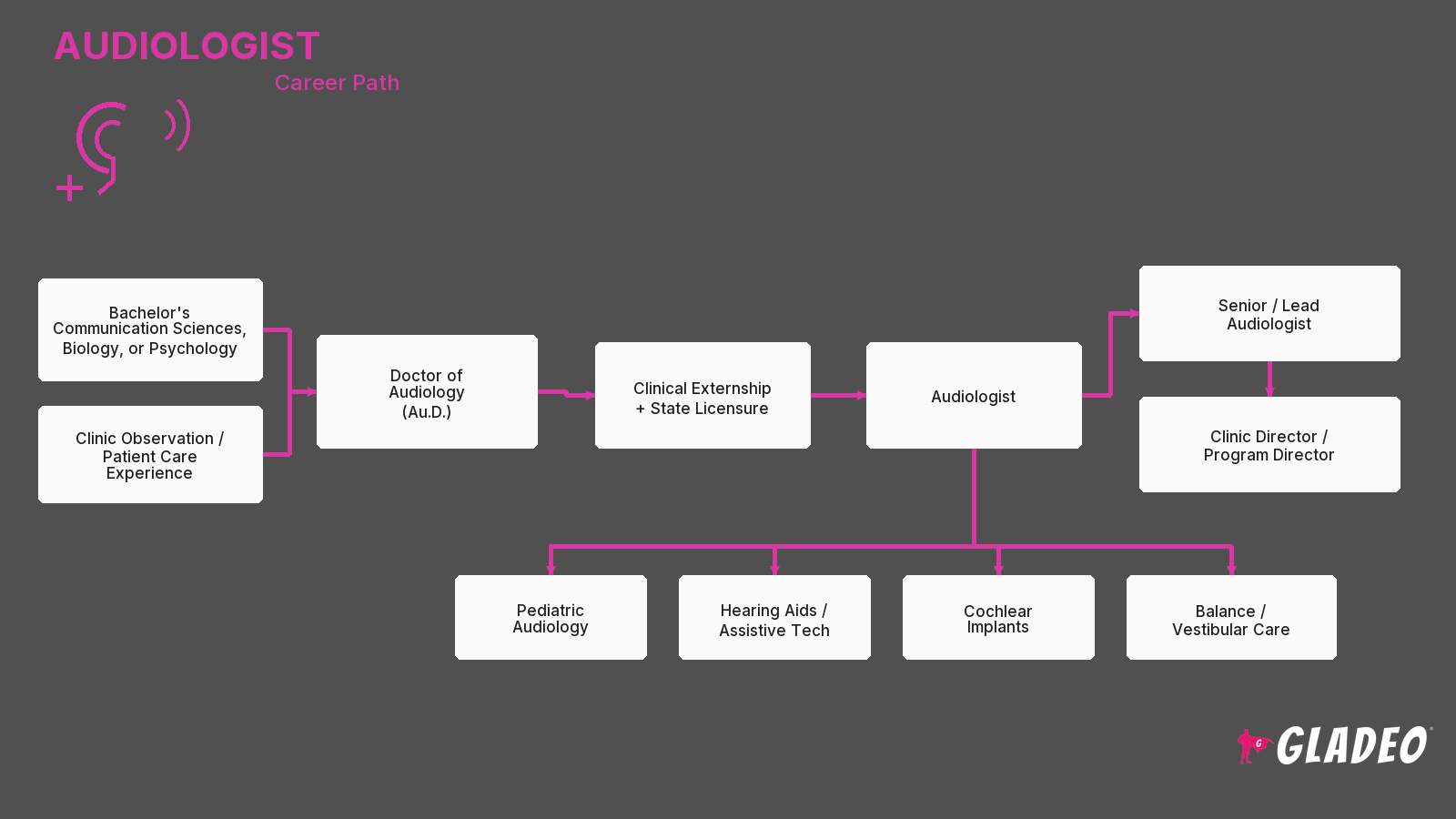
Para convertirse en audiólogo es necesario contar con una sólida formación en ciencias y en el ámbito sanitario, seguida de una formación de posgrado especializada. La mayoría de los audiólogos obtienen el título de Doctor en Audiología (Au.D.), que les dota de las habilidades clínicas y los conocimientos necesarios para el diagnóstico, el tratamiento y la atención al paciente.
Los estudiantes pueden cursar asignaturas relacionadas con temas como:
- Biología y anatomía humana
- Física del sonido y acústica
- Psicología y trastornos de la comunicación
- Terminología médica
- Estadística y métodos de investigación
- Desarrollo del habla y del lenguaje
- Principios y prácticas de la audiología
- Tecnología de los audífonos
- Trastornos vestibulares y del equilibrio
- Experiencia en prácticas clínicas
La experiencia práctica adquirida a través de las prácticas clínicas es fundamental para desarrollar habilidades prácticas. La creación de un sólido historial de casos clínicos e interacciones con pacientes durante la formación ayuda a preparar a los candidatos para los exámenes de habilitación profesional y para desarrollar una carrera profesional satisfactoria en el ámbito de la audiología.
- Cursa asignaturas avanzadas de biología, química y física para adquirir una base científica.
- Apúntate a clases de psicología y comunicación para comprender el comportamiento humano y el lenguaje.
- Participa en clubes de ciencias de la salud o haz voluntariado en centros sanitarios.
- Desarrolla sólidas habilidades comunicativas e interpersonales a través de presentaciones y proyectos en grupo.
- Explora los programas de verano o las prácticas relacionadas con la asistencia sanitaria o la audiología.
- Practica el uso de la tecnología y los programas informáticos para sentirte más cómodo con las herramientas digitales.
- Asiste a ferias de empleo y habla con audiólogos sobre su trabajo.
- Lee artículos científicos y sobre salud para mantenerte al día de los avances médicos.
- Únete a clubes dedicados a la oratoria, el debate o la música para mejorar tus habilidades de comprensión auditiva y expresión oral.
- Elabora un dossier con tus experiencias académicas y de voluntariado relacionadas con la salud y la comunicación.
- Elige programas acreditados por organismos reconocidos en el ámbito de la formación en audiología.
- Busca centros que ofrezcan buenas oportunidades de prácticas clínicas.
- Busca programas cuyo profesorado tenga experiencia tanto en investigación como en atención clínica.
- Ten en cuenta las instituciones que cuentan con acuerdos de colaboración para realizar prácticas en hospitales o clínicas.
- Comprueba que el plan de estudios incluya las últimas tecnologías en audífonos y sistemas vestibulares.
- Asegúrate de que el programa prepare a los estudiantes para los exámenes de habilitación profesional y las certificaciones.
- Busca clases con pocos alumnos para que la enseñanza sea personalizada.
- Encuentra programas que ofrezcan formación continua y apoyo al desarrollo profesional.
- Busca centros educativos con buenas tasas de inserción laboral y redes de antiguos alumnos.
- Asegúrate de que el programa incluya formación en asesoramiento a pacientes y habilidades de comunicación.
- Elige programas que hagan hincapié en la colaboración interdisciplinar.
- Ten en cuenta las oportunidades de investigación disponibles en el ámbito de la audiología.
- Haz voluntariado o prácticas en clínicas de audiología o centros sanitarios para adquirir experiencia.
- Elabora un currículum sólido en el que destaquen tus prácticas clínicas y las asignaturas relevantes que hayas cursado.
- Elabora un portafolio profesional en el que se muestren casos prácticos de pacientes y tus habilidades.
- Establece contactos con audiólogos y profesionales sanitarios a través de eventos y redes sociales.
- Solicita puestos de nivel inicial, como asistente o técnico de audiología.
- Prepárate para los exámenes de obtención de la licencia repasando los conocimientos clínicos y las prácticas éticas.
- Practica técnicas de comunicación y asesoramiento con pacientes en simulacros de entrevistas.
- Busca la orientación y el consejo de audiólogos con experiencia.
- Mantente al día de los avances tecnológicos en audiología a través de talleres y seminarios web.
- Únete a organizaciones profesionales de audiología para acceder a bolsas de empleo y recursos.
- Adapta tus solicitudes a clínicas u hospitales que cuenten con departamentos de audiología.
- Muestra empatía y profesionalidad durante las entrevistas y las audiciones.
- Adquiere experiencia a través de diversos casos clínicos y de la formación continua.
- Obtener certificaciones de especialización en áreas como la audiología pediátrica o vestibular.
- Establecer relaciones sólidas con los profesionales sanitarios y las organizaciones comunitarias.
- Aspirar a puestos de liderazgo, como supervisor clínico o coordinador de programas.
- Participa en actividades de investigación o docencia para ampliar tus conocimientos especializados.
- Mantén tu participación en las asociaciones profesionales y asiste a congresos.
- Desarrollar competencias en tecnologías emergentes y servicios de teleaudiología.
- Plantéate cursar estudios superiores o obtener titulaciones en ámbitos relacionados con la asistencia sanitaria.
Páginas web:
- Academia Americana de Audiología (www.audiology.org)
- Asociación Americana del Habla, el Lenguaje y la Audición (www.asha.org)
- Asociación Americana de Pérdida Auditiva (www.hearingloss.org)
- Instituto Nacional de la Sordera y Otros Trastornos de la Comunicación (www.nidcd.nih.gov)
- Academia de Doctores en Audiología (www.audiologist.org)
- Sociedad Internacional de Audiología (www.isa-audiology.org)
- AudiologyOnline (www.audiologyonline.com)
- Fundación para la Salud Auditiva (www.hearinghealthfoundation.org)
- Biociencia y Tecnología del Habla y la Audición (www.shbt.org)
- Fundación Americana de Audiología (www.audiologyfoundation.org)
- Asociación Nacional para la Conservación de la Audición (www.hearingconservation.org)
- Better Hearing Institute (www.betterhearing.org)
- Programa de Audición de la Organización Mundial de la Salud (www.who.int/health-topics/hearing-loss)
- Revisión de la audiencia (www.hearingreview.com)
Libros:
- Audiología: De la ciencia a la práctica, de Steven Kramer
- Introducción a la audiología, de Frederick N. Martin y John Greer Clark
- Audífonos de Harvey Dillon
- Fundamentos de la rehabilitación auditiva, de Nancy Tye-Murray
- Rehabilitación vestibular, de Susan Herdman
Si no te sale bien convertirte en audiólogo, hay muchas profesiones relacionadas que te permiten seguir trabajando en los ámbitos de la audición, la comunicación y la asistencia sanitaria de forma significativa.
- Logopeda
- Especialista en audífonos
- Terapeuta ocupacional
- Fisioterapeuta
- Asesor de rehabilitación
- Enfermera de otorrinolaringología (oído, nariz y garganta)
- Técnico de laboratorio médico
- Trabajador social especializado en servicios para personas con discapacidad
- Terapeuta educativo
- Educador sanitario
Sección de noticias

Ofertas de empleo destacadas
Cursos y herramientas en línea