






Destacados
Técnico de audio, técnico de vídeo, técnico de radiodifusión, especialista en audiovisuales, ingeniero de sonido, técnico de cámara, técnico de producción, técnico multimedia, técnico de señales, técnico de eventos, instalador de sistemas audiovisuales, especialista en asistencia técnica
Imagina asistir a un concierto en el que el sonido es nítido y las imágenes están perfectamente sincronizadas, o ver una retransmisión en directo en la que cada ángulo de cámara y cada micrófono captan el momento a la perfección. Los técnicos de equipos de audio y vídeo hacen posible estas experiencias al garantizar que todo el equipo técnico funcione a la perfección entre bastidores.
En una jornada habitual, estos técnicos se encargan de montar, probar y manejar equipos de sonido e imagen para eventos, retransmisiones, instalaciones o producciones. Colaboran estrechamente con organizadores de eventos, productores, ingenieros y artistas para resolver problemas técnicos, ajustar los niveles de audio y optimizar las señales de vídeo, con el fin de que el público disfrute de la mejor experiencia posible.
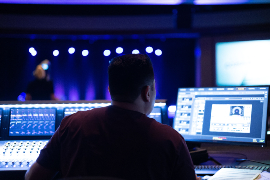
Mediante el uso de herramientas como mesas de mezclas, micrófonos, conmutadores de vídeo y cables, junto con programas informáticos para la comprobación y edición de señales, los técnicos de equipos de audio y vídeo combinan sus conocimientos técnicos con la capacidad de resolver problemas con rapidez. Su trabajo es esencial para garantizar que los eventos en directo, las retransmisiones y las grabaciones se desarrollen sin contratiempos, asegurándose de que los espectadores y oyentes disfruten de un entretenimiento y una comunicación fluidos.
- Ser la fuerza invisible que da vida a los conciertos, espectáculos y retransmisiones con un sonido y unas imágenes perfectos.
- Resolver problemas técnicos y solucionar incidencias bajo presión para garantizar el buen desarrollo de los eventos.
- Colaborar con equipos creativos y artistas para dar vida a las producciones.
- Ver los resultados inmediatos de tu trabajo mientras el público disfruta de una experiencia de audio y vídeo impecable.
Horario de trabajo
Los técnicos de equipos de audio y vídeo suelen trabajar en horarios irregulares, incluyendo noches, fines de semana y días festivos, para adaptarse a los eventos en directo y las producciones. Pueden pasar largos periodos de tiempo de pie o trasladando equipos pesados en diversos entornos, desde conciertos al aire libre hasta estudios de televisión. Muchos trabajan por cuenta propia o por contrato, viajan con frecuencia y se adaptan rápidamente a los cambios de horarios y lugares de trabajo.
Funciones habituales
- Instala y comprueba los micrófonos, los altavoces, las cámaras y las pantallas de vídeo antes de los eventos.
- Manejar mesas de mezclas y conmutadores de vídeo durante eventos en directo o grabaciones.
- Tender cables y conectar los equipos a las fuentes de alimentación y a los paneles de control.
- Resolver y reparar sobre el terreno las averías de los equipos de audio y vídeo.
- Coordinarse con los equipos de producción para ajustar los niveles de sonido y los ángulos de cámara.
- Realizar el mantenimiento y el inventario del equipo de audio y vídeo, asegurándose de que todo el equipo esté en buen estado de funcionamiento.
- Instalar sistemas de audio y vídeo, tanto permanentes como temporales, en recintos o estudios.
- Calibrar los equipos para que cumplan con las especificaciones técnicas y las normas de calidad.
- Sigue los protocolos de seguridad durante la instalación y el funcionamiento del equipo.
- Documenta los problemas relacionados con los equipos y las tareas de mantenimiento para poder consultarlos en el futuro.
- Colaborar con la iluminación y otras tareas de apoyo técnico según sea necesario.
- Formar a los nuevos técnicos o ayudantes en el manejo de los equipos y en materia de seguridad.
Responsabilidades adicionales
- Mantente al día sobre las nuevas tecnologías y equipos de audio y vídeo.
- Elaborar informes detallados sobre la organización de los eventos y los problemas técnicos que se hayan planteado.
- Ayudar a diseñar configuraciones de audio y vídeo adaptadas a las necesidades específicas de cada evento.
- Colaborar con los proveedores para adquirir o alquilar equipos especializados.
- Gestionar el inventario y realizar pedidos de piezas y suministros según sea necesario.
- Asegúrate de que se cumplan las normas del recinto y de retransmisión.
- Colaborar en los ensayos para perfeccionar los aspectos técnicos antes de los conciertos en directo.
- Prestar apoyo en el desmontaje tras el evento y en el almacenamiento del material.
La mañana suele comenzar revisando el programa del evento y comprobando el estado del equipo para preparar el montaje. Los técnicos se coordinan con los responsables del evento y el personal de producción para conocer los requisitos técnicos específicos y los plazos.
A mediodía se lleva a cabo la instalación física de micrófonos, altavoces, cámaras y cables en el recinto o el estudio. Se realizan pruebas para garantizar que todos los sistemas funcionen correctamente y se hacen ajustes en función de las indicaciones de los ingenieros de sonido y los directores.
Las tardes y las noches están dedicadas al manejo de los equipos durante las actuaciones en directo o las retransmisiones. Los técnicos permanecen atentos para solucionar de inmediato cualquier fallo técnico y se comunican con los miembros del equipo para garantizar que el evento se desarrolle sin contratiempos. Una vez finalizado, ayudan a recoger el equipo y a documentar cualquier problema que haya surgido.
Habilidades interpersonales
- Resolución de problemas bajo presión
- Atención al detalle
- Buena comunicación
- Trabajo en equipo y colaboración
- Capacidad de adaptación a condiciones cambiantes
- Gestión del tiempo
- Escucha y observación críticas
- Resistencia física
- Paciencia y perseverancia
- Orientación al servicio al cliente
- Toma rápida de decisiones
- Capacidad de organización
Competencias técnicas
- Manejo de mesas de mezclas de audio
- Instalación y calibración de micrófonos
- Puesta en marcha y resolución de problemas de los mezcladores de vídeo
- Equipos de cableado y instalación eléctrica
- Uso de herramientas de comprobación y supervisión de señales
- Reparación y mantenimiento básico de equipos
- Conocimiento de las normas de radiodifusión
- Conocimientos sobre formatos de audio y vídeo digitales
- Uso de software para el control de audio y vídeo
- Lectura de manuales técnicos y esquemas
- Técnico de radiodifusión: Se especializa en el manejo y mantenimiento de equipos para emisiones de radio y televisión.
- Técnico de sonido en directo: se encarga de la configuración y la mezcla del sonido en conciertos y eventos en directo.
- Técnico de vídeo: Se encarga de gestionar las cámaras de vídeo, los proyectores y las pantallas durante las producciones.
- Técnico de instalación: Se encarga de instalar sistemas permanentes de audio y vídeo en recintos o edificios.
- Técnico de campo: Se desplaza a distintos lugares donde se celebran eventos para montar el equipo y solucionar los problemas técnicos.
- Técnico de grabación: Trabaja en estudios para capturar y mezclar grabaciones de audio.
- Técnico de eventos: Se encarga de todos los aspectos técnicos de los eventos públicos y privados.
- Técnico de posproducción: Colabora en la edición y el retoque del audio y el vídeo tras el rodaje o la grabación.
- Cadenas de televisión y emisoras de radio
- Salas de conciertos y teatros
- Empresas de producción de eventos
- Estudios de cine y de grabación
- Departamentos de audiovisuales de las empresas
- Recintos deportivos y estadios
- Cadenas de televisión
- Empresas de alquiler y puesta en escena
- Centros educativos
- Centros de conferencias
- Organismos públicos
- Empresas de espectáculos en directo
Los técnicos de equipos de audio y vídeo suelen trabajar con plazos muy ajustados y en situaciones de gran presión, en las que los fallos técnicos pueden trastocar producciones enteras. Mantener la calma y la concentración durante los eventos en directo es fundamental, al igual que estar preparado para resolver rápidamente cualquier problema inesperado.
La jornada laboral puede ser larga e irregular, e incluir turnos de noche, fines de semana y días festivos, en función de los horarios de los eventos. Las exigencias físicas incluyen levantar equipos pesados y permanecer de pie durante largos periodos de tiempo, a veces en entornos ruidosos o con mucha gente.
Aunque el trabajo autónomo ofrece flexibilidad, también puede implicar una carga de trabajo e ingresos irregulares. Los técnicos deben ser capaces de adaptarse y estar dispuestos a viajar con frecuencia, a menudo compaginando varios proyectos a la vez para labrarse una reputación y ampliar su cartera de clientes.
- El uso cada vez mayor de la tecnología inalámbrica de audio y vídeo para reducir el desorden de cables.
- Una dependencia cada vez mayor del procesamiento de señales digitales y de la mezcla basada en software.
- Técnicas de producción a distancia que permiten a los técnicos gestionar eventos desde diferentes lugares.
- Integración de la realidad virtual y la realidad aumentada en eventos en directo y retransmisiones.
- La demanda de vídeo en alta definición y calidad 4K requiere equipos de vídeo avanzados.
- Automatización de los controles de las cámaras y de la mezcla de audio para optimizar los flujos de trabajo.
- La creciente importancia de la ciberseguridad para los sistemas de radiodifusión y streaming.
- Las iniciativas de sostenibilidad impulsan el uso de equipos e instalaciones energéticamente eficientes.
- Formar a los técnicos en las disciplinas de audio y vídeo para que adquieran versatilidad.
- Uso de herramientas de inteligencia artificial para mejorar la calidad del audio y el vídeo durante la producción en directo.
A muchos técnicos de equipos de audio y vídeo les fascinaban la música, los videojuegos o la electrónica cuando eran niños, y solían hacer experimentos con altavoces, cámaras o dispositivos de grabación. Les gustaba trastear con aparatos y descubrir cómo las diferentes piezas funcionaban juntas para crear sonido o imágenes.
A menudo les gustaba participar en obras de teatro escolares, bandas o proyectos de vídeo, lo que les permitía adquirir experiencia desde muy temprano en el manejo de mesas de sonido o en la grabación de eventos. Su curiosidad por la tecnología y su deseo de ayudar a los demás a disfrutar de los medios de comunicación solían despertar su interés por esta profesión.
Los técnicos en equipos de audio y vídeo suelen empezar con un título de bachillerato y adquieren formación especializada a través de escuelas técnicas, centros de formación profesional o programas de aprendizaje centrados en la electrónica, la ingeniería de audio o la producción de vídeo.
Los estudiantes pueden cursar asignaturas relacionadas con temas como:
- Ingeniería de sonido
- Producción de vídeos
- Fundamentos de la electrónica
- Redes informáticas
- Tecnología de los medios digitales
- Física (Sonido y luz)
- Dibujo técnico y esquemas
- Matemáticas (álgebra y geometría)
- Habilidades de comunicación
- Procedimientos de seguridad
La experiencia práctica es fundamental en este campo, por lo que las prácticas, el voluntariado en eventos o el trabajo en los clubes de comunicación de los centros educativos ayudan a desarrollar habilidades prácticas. Muchos técnicos también obtienen certificaciones en equipos o programas informáticos específicos para mejorar sus perspectivas laborales.
- Únete al club de audiovisuales o de medios de comunicación de tu colegio para adquirir experiencia práctica.
- Cursa asignaturas de electrónica, informática y artes audiovisuales.
- Ofrécete como voluntario para encargarte del sonido o el vídeo en los eventos y las producciones del colegio.
- Busca prácticas o trabajos de verano en teatros o emisoras locales.
- Asiste a talleres o campamentos centrados en la tecnología de audio y vídeo.
- Crea tus propios miniproyectos, como grabar podcasts o rodar vídeos.
- Aprende a utilizar el software y los equipos habituales en el sector mediante tutoriales.
- Establece contactos con profesionales a través de las redes sociales o en eventos locales.
- Plantéate la posibilidad de matricularte simultáneamente en centros de formación profesional para recibir una formación especializada.
- Mantente al día de las nuevas tendencias y herramientas tecnológicas en el ámbito de la producción audiovisual.
- Busca programas que ofrezcan prácticas de laboratorio y oportunidades de participar en proyectos reales.
- Elige centros educativos que ofrezcan prácticas o colaboraciones con el sector.
- Comprueba que los profesores tengan experiencia profesional en los ámbitos del audio y el vídeo.
- Asegúrate de que el plan de estudios abarque tanto las competencias técnicas relacionadas con el audio como con el vídeo.
- Comprueba la disponibilidad de equipos y programas informáticos modernos para la formación.
- Plantéate cursar programas que enseñen técnicas de resolución de problemas y reparación.
- Busca cursos sobre producción de eventos en directo y tecnología de retransmisión.
- Evaluar el tamaño de las clases para garantizar una enseñanza personalizada.
- Busca programas que incluyan opciones de preparación para la obtención de certificados.
- Busca centros educativos que cuenten con asociaciones o clubes de medios de comunicación estudiantiles activos.
- Ten en cuenta el coste y la disponibilidad de ayudas económicas.
- Analiza las tasas de éxito y de inserción laboral de los titulados en investigación.
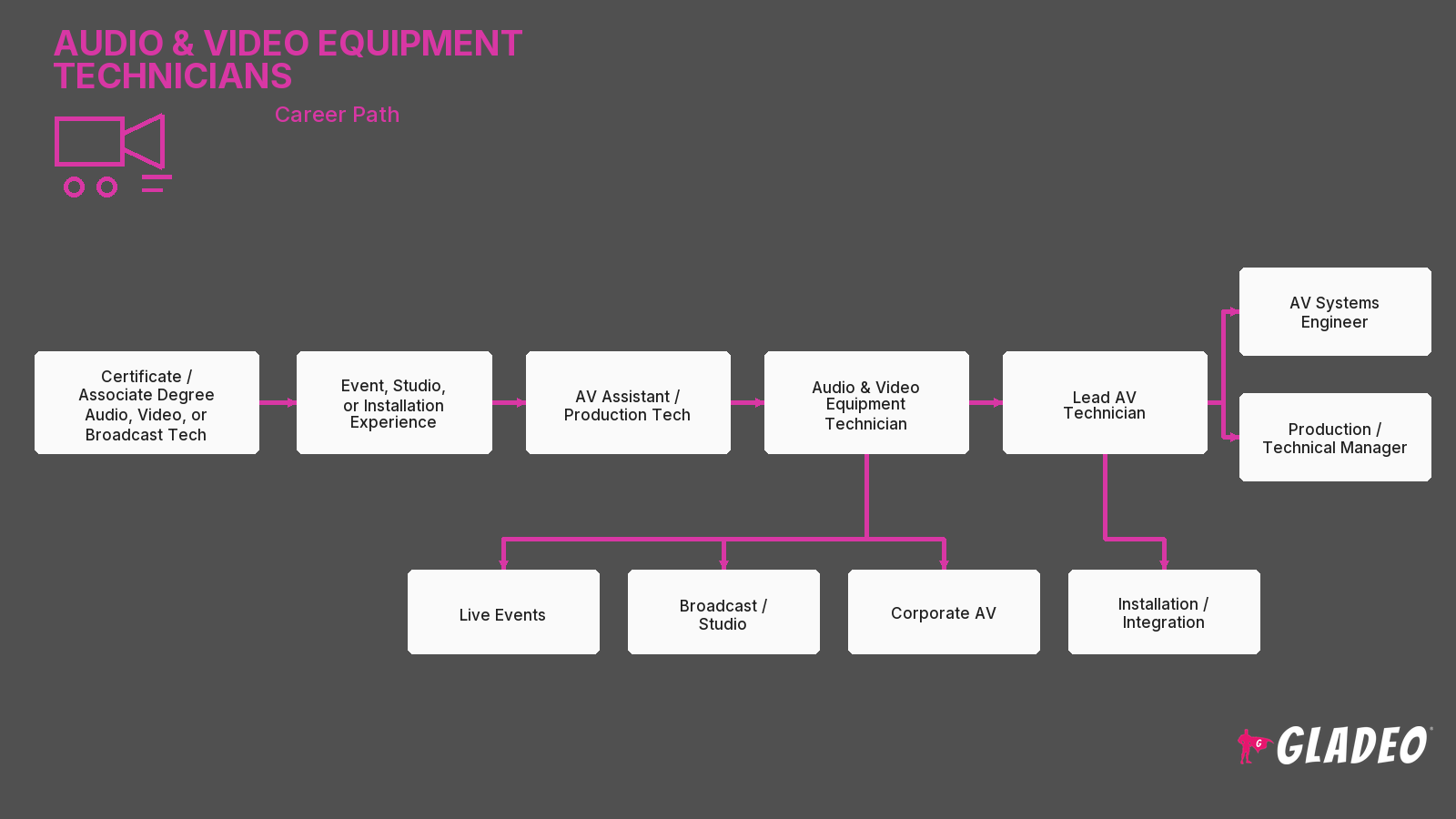
- Solicita puestos de nivel inicial, como asistente audiovisual, tramoyista o técnico junior.
- Elabora un portafolio en el que se recojan tus trabajos relacionados con eventos escolares o locales.
- Establece contactos con profesionales del sector en eventos y foros en línea.
- Hazte voluntario en teatros comunitarios, eventos de la iglesia o representaciones escolares.
- Practica la instalación y el manejo de diversos equipos de audio y vídeo.
- Aprende las técnicas básicas de resolución de problemas y mantenimiento.
- Obtén certificaciones de marcas populares de equipos o de software.
- Sé flexible con los horarios y los lugares de trabajo para adquirir experiencia.
- Desarrolla sólidas habilidades de comunicación para trabajar en equipo.
- Pide opiniones para mejorar tus habilidades técnicas e interpersonales.
- Lleva un registro de los proyectos y retos que has abordado.
- Sé proactivo a la hora de aprender nuevas tecnologías y técnicas.
- Adquirir experiencia en el manejo de equipos más complejos y en la gestión de configuraciones.
- Adquiere conocimientos especializados en ámbitos como la radiodifusión o el sonido en directo.
- Busca certificaciones en tecnologías avanzadas de audio y vídeo.
- Establecer relaciones sólidas con productores, ingenieros y clientes.
- Asume puestos de responsabilidad, como el de técnico jefe o supervisor.
- Ampliar las competencias para incluir el diseño y la instalación de sistemas.
- Mantente al día sobre las tecnologías emergentes y las tendencias del sector.
- Plantéate ampliar tu formación mediante titulaciones técnicas o talleres.
Páginas web:
- Sociedad de Ingeniería de Audio (aes.org)
- Sociedad de Ingenieros de Radiodifusión (sbe.org)
- Asociación Internacional de Eventos en Directo (ilea.org)
- AVIXA - Asociación de Experiencias Audiovisuales e Integradas (avixa.org)
- Asociación de Educación en Radiodifusión (beaweb.org)
- ProSoundWeb (prosoundweb.com)
- Videomaker (videomaker.com)
- Sound & Video Contractor (svconline.com)
- Revista Mix (mixonline.com)
- Indicaciones escénicas (stagedirections.com)
- Live Design Online (livedesignonline.com)
- TechSoup (techsoup.org)
- Creative COW (creativecow.net)
- Production Hub (productionhub.com)
Libros:
- «Técnicas modernas de grabación », de David Miles Huber
- El diccionario de audio, de Glenn White y Gary J. Louie
- Sonido en directo a cargo de Scott Hunter Stark
- «Video Shooter: Cómo contar historias con cámaras DV, HD y HDV», de Barry Braverman
- «Manual de referencia para ingenieros de radiodifusión», de Jerry Whitaker
Si te gusta trabajar con tecnología, resolver problemas y colaborar en producciones en directo, pero quieres explorar otras salidas profesionales, existen varias opciones relacionadas que ofrecen oportunidades muy satisfactorias.
- Ingeniero de radiodifusión
- Diseñador de sonido
- Técnico de iluminación
- Editor de vídeo
- Coordinador de eventos
- Técnico en electrónica
- Especialista en soporte informático
- Técnico en telecomunicaciones
- Asistente de producción audiovisual
- Director de escena
Sección de noticias

Ofertas de empleo destacadas
Cursos y herramientas en línea