




Destacados
Asistente de fotografía arquitectónica, especialista en imágenes arquitectónicas, fotógrafo de interiores, fotógrafo inmobiliario, fotógrafo comercial, fotógrafo de diseño, fotógrafo de inmuebles, especialista en medios arquitectónicos, fotógrafo de documentación visual, fotógrafo del entorno construido
Los fotógrafos de arquitectura se especializan en capturar imágenes de edificios, interiores, estructuras y espacios diseñados para clientes como arquitectos, diseñadores de interiores, empresas inmobiliarias, hoteles, constructoras, revistas y agencias de publicidad. Su trabajo contribuye a poner de relieve la belleza, la funcionalidad y los detalles de diseño de los espacios mediante una fotografía cuidadosamente planificada.
Estos profesionales combinan la creatividad artística con la destreza técnica para fotografiar viviendas, rascacielos, museos, oficinas, hoteles, paisajes y espacios públicos. Analizan minuciosamente la iluminación, los ángulos, la composición, la perspectiva y el momento adecuado para crear imágenes visualmente impactantes que representen con precisión los diseños arquitectónicos.
Los fotógrafos de arquitectura suelen retocar y mejorar las fotografías con programas informáticos profesionales para garantizar que las imágenes finales cumplan con las expectativas de los clientes y los estándares de publicación. Algunos también utilizan drones, equipos de vídeo y tecnología de visitas virtuales para crear experiencias visuales inmersivas.
A través de la narración visual y la atención al detalle, los fotógrafos de arquitectura ayudan a arquitectos, diseñadores, promotores y empresas a dar a conocer sus proyectos, al tiempo que documentan estructuras y espacios importantes con fines de marketing, publicaciones y registros históricos.
- La combinación de la fotografía con la arquitectura, el diseño y la narración visual
- Trabajar en entornos creativos y explorar espacios y edificios singulares
- Ayudamos a arquitectos y diseñadores a presentar su trabajo de forma profesional
- Ver trabajos publicados en revistas, páginas web, anuncios o portfolios de diseño
- Oportunidades para viajar y fotografiar diferentes ciudades, lugares emblemáticos e interiores
- Cómo crear un negocio como autónomo o una marca creativa personal
- Utilizando equipos fotográficos avanzados, drones y tecnología de edición
- Contribuir a la conservación y documentación de la historia de la arquitectura
Horario de trabajo
Los fotógrafos de arquitectura suelen tener horarios flexibles que pueden incluir madrugadas, tardes, fines de semana o desplazamientos, en función de las condiciones de luz y las necesidades del cliente. Los fotógrafos autónomos pueden tener horarios irregulares en función de los plazos de los proyectos, mientras que los fotógrafos contratados por estudios, empresas de comunicación o agencias inmobiliarias suelen tener horarios a tiempo completo más tradicionales.
Funciones habituales
- Fotografiar edificios, interiores, paisajes y espacios de diseño para los clientes
- Planifica las sesiones fotográficas teniendo en cuenta la iluminación, el tiempo y las características arquitectónicas
- Colaborar con arquitectos, diseñadores de interiores, agentes inmobiliarios, promotores y equipos de marketing
- Selecciona el equipo de cámara, los objetivos, los drones, los equipos de iluminación y los accesorios para cada proyecto
- Captura imágenes de gran angular, primeros planos detallados y perspectivas tanto de exteriores como de interiores
- Ajusta la iluminación y la puesta en escena para mejorar la presentación visual
- Edita y mejora fotografías con programas de edición profesionales
- Organizar y gestionar archivos de imágenes digitales y archivos de proyectos
- Crear imágenes de alta resolución para páginas web, anuncios, revistas, folletos y portfolios
- Asegúrate de que las fotos reflejen con precisión los detalles de diseño, los colores, las texturas y la distribución espacial.
- Desplazamientos a viviendas, edificios de oficinas, hoteles, museos, locales comerciales u obras de construcción
- Cumplir con los plazos de los proyectos sin dejar de garantizar una alta calidad de imagen y satisfacer las expectativas de los clientes
- Comunicarse con los clientes sobre los objetivos creativos, la imagen de marca y el uso de las imágenes
- Realizar el mantenimiento del equipo fotográfico y resolver problemas técnicos
- Sigue los procedimientos de seguridad cuando trabajes en tejados, obras o zonas elevadas.
Responsabilidades adicionales
- Mantente al día sobre las tendencias fotográficas, los programas de edición y la tecnología de las cámaras
- Aprende técnicas de fotografía con drones y de imágenes aéreas
- Gestionar contratos de autónomos, facturas, acuerdos de licencia y operaciones comerciales
- Crea portafolios en línea, páginas web y contenido para redes sociales con el fin de atraer clientes
- Explora los lugares antes de las sesiones fotográficas para identificar los ángulos y las condiciones de iluminación ideales
- Coordinarse con los estilistas, los equipos de puesta en escena o los asistentes durante las sesiones fotográficas
- Crear contenidos de vídeo, visitas virtuales o imágenes de 360 grados para los clientes
- Envía tus trabajos a revistas, concursos, galerías o publicaciones de diseño
- Establece contactos con arquitectos, constructores, diseñadores y profesionales creativos
- Formar a asistentes o colaborar con otros fotógrafos en proyectos de gran envergadura
La jornada de un fotógrafo de arquitectura suele comenzar a primera hora de la mañana o al atardecer, cuando la luz natural es ideal para capturar edificios e interiores. Antes de llegar al lugar de la sesión, revisan los objetivos del cliente, preparan el equipo fotográfico, cargan las baterías y planifican las tomas en función de las condiciones meteorológicas y las características de diseño del edificio.
Durante una sesión fotográfica, colocan cuidadosamente las cámaras, ajustan la iluminación y prueban diferentes ángulos para resaltar la forma, la textura y la atmósfera de la arquitectura. Pueden trabajar en estrecha colaboración con arquitectos, diseñadores de interiores, agentes inmobiliarios o equipos de puesta en escena para garantizar que cada detalle tenga un aspecto impecable y resulte visualmente atractivo. Algunas sesiones implican subir a azoteas, utilizar drones o esperar pacientemente a que se den las condiciones de iluminación perfectas.
Tras la sesión fotográfica, dedican gran parte del día a editar las imágenes con programas profesionales para corregir los colores, la iluminación, los reflejos y la perspectiva. Organizan los archivos, se comunican con los clientes, suben las imágenes definitivas y gestionan los calendarios de los próximos proyectos. Los fotógrafos arquitectónicos autónomos también pueden dedicar tiempo a promocionar sus servicios, actualizar sus portfolios y establecer contactos con posibles clientes.
Habilidades interpersonales
- Visión creativa y artística
- Atención al detalle
- Comunicación clara
- Paciencia
- Capacidad de adaptación
- Resolución de problemas
- Organización
- Gestión del tiempo
- Toma de decisiones
- Colaboración y trabajo en equipo
- Capacidad para trabajar con plazos y bajo presión
Competencias técnicas
- Funcionamiento de la cámara y conceptos básicos de fotografía
- Fotografía arquitectónica y de interiores
- Técnicas de iluminación
- Edición fotográfica con Photoshop y Lightroom
- Conceptos básicos de la fotografía con drones
- Composición y encuadre
- Uso de material fotográfico
- Gestión y organización de archivos
- Conocimientos básicos de arquitectura y diseño
- Corrección de color y mejora de la imagen
- Fotógrafos especializados en arquitectura residencial: Realizan fotografías de viviendas, apartamentos e interiores residenciales para arquitectos, constructores, diseñadores y empresas inmobiliarias.
- Fotógrafos de arquitectura comercial: Capturan imágenes de edificios de oficinas, hoteles, centros comerciales, restaurantes e inmuebles comerciales con fines publicitarios y de marketing.
- Fotógrafos de interiores: se centran en los espacios interiores, la disposición del mobiliario, la iluminación y los detalles del diseño de interiores.
- Fotógrafos inmobiliarios: Realizan fotografías y visitas virtuales de inmuebles para anuncios inmobiliarios y la comercialización de propiedades.
- Fotógrafos aéreos y con drones: Utilizan drones para capturar vistas aéreas de edificios, paisajes y proyectos de construcción.
- Fotógrafos arquitectónicos autónomos: Trabajan de forma independiente con arquitectos, empresas constructoras, revistas, promotores inmobiliarios y empresas de diseño en encargos relacionados con proyectos concretos.
- Estudios de arquitectura
- Empresas de diseño de interiores
- Agencias inmobiliarias
- Empresas de construcción y promoción inmobiliaria
- Marcas del sector hotelero y de la hostelería
- Agencias de publicidad y marketing
- Estudios fotográficos
- Revistas y editoriales
- Empresas de home staging
- Empresas de medios de comunicación y contenidos digitales
Se espera que los fotógrafos de arquitectura conviertan los edificios y los espacios en imágenes de alta calidad que reflejen con precisión la visión del diseñador. Esto requiere una gran atención al detalle, creatividad y habilidades técnicas en materia de iluminación, composición y manejo de la cámara.
Este trabajo suele implicar horarios largos e irregulares, sobre todo cuando hay que hacer fotos al amanecer, al atardecer o por la noche para conseguir la mejor iluminación. Los fotógrafos también pueden tener que lidiar con cambios meteorológicos, plazos ajustados y un trabajo físicamente exigente, al tener que transportar el equipo y trabajar sobre el terreno.
Para los autónomos, también existe el reto de encontrar clientes y gestionar unos ingresos irregulares, al tiempo que deben compaginar las sesiones fotográficas, la edición y las tareas administrativas. A pesar de estos sacrificios, esta profesión resulta gratificante para quienes disfrutan combinando el arte, la arquitectura y la fotografía.
- La fotografía con drones y las imágenes aéreas están ganando popularidad en el ámbito de la fotografía arquitectónica
- Las visitas virtuales y la fotografía en 360 grados están ganando terreno en el marketing inmobiliario y del sector hotelero
- Cada vez hay más demanda de fotografías de interiores pensadas para las redes sociales
- La fotografía digital de alta resolución y las herramientas avanzadas de edición siguen mejorando la calidad de la imagen
- Los arquitectos y diseñadores están invirtiendo cada vez más en la identidad visual profesional
- Los edificios sostenibles y respetuosos con el medio ambiente se están convirtiendo en motivos fotográficos muy populares
- Los clientes solicitan cada vez más vídeos explicativos y visitas cinematográficas a las propiedades.
- Las herramientas de inteligencia artificial están ayudando a los fotógrafos a organizar y editar imágenes más rápidamente
- Los hoteles de lujo y las empresas inmobiliarias están recurriendo a la fotografía arquitectónica centrada en el estilo de vida
- La colaboración a distancia con los clientes mediante la revisión en línea y la entrega digital es cada vez más habitual
Las personas a las que les atrae la profesión de fotógrafo de arquitectura suelen haber disfrutado desde muy temprana edad de la fotografía, el arte, el diseño o la exploración de edificios y espacios. A muchos les gustaba hacer fotos de casas, paisajes urbanos, interiores o estructuras interesantes con cámaras o teléfonos móviles. A algunos les gustaba dibujar, decorar habitaciones o aprender sobre arquitectura y estilos de diseño.
A otros les interesaba la tecnología, la edición de fotos o la creación de contenidos visualmente atractivos para las redes sociales. A muchos también les gustaba viajar, fijarse en los detalles y encontrar formas creativas de capturar la luz, la simetría y la perspectiva. Esta combinación de creatividad, capacidad de observación y habilidades técnicas suele llevar a las personas a dedicarse profesionalmente a la fotografía arquitectónica.
- Es recomendable, aunque no siempre obligatorio, estar en posesión de una titulación universitaria en fotografía, artes visuales, artes multimedia o cualquier otro campo creativo relacionado.
- En esta profesión, contar con un buen portfolio suele ser más importante que la formación académica.
- La formación práctica a través de talleres, prácticas o puestos como asistente de fotógrafo resulta muy valiosa
- Los clientes y las empresas valoran mucho la experiencia en fotografía arquitectónica, de interiores o inmobiliaria.
- Es imprescindible tener conocimientos de programas de edición fotográfica, como Adobe Photoshop y Lightroom
- Para realizar un trabajo de calidad profesional, es necesario formarse en el manejo de la cámara, las técnicas de iluminación y la composición.
- Es posible que se exija o se valore positivamente una certificación en fotografía con drones para la realización de tomas aéreas de arquitectura.
- Algunos fotógrafos realizan cursos breves o obtienen titulaciones en fotografía digital, diseño visual o videografía
- Los fotógrafos autónomos suelen adquirir sus habilidades mediante el autoaprendizaje y la experiencia en proyectos reales, más que a través de programas formales.
- Los programas deberían ofrecer una sólida formación en fotografía, diseño visual, iluminación y edición digital
- Busca cursos que se centren en la fotografía arquitectónica, de interiores o comercial
- Comprueba si el programa incluye prácticas en estudio y experiencia real en sesiones fotográficas.
- Asegúrate de que los alumnos dispongan de cámaras profesionales, equipo de iluminación y programas de edición
- Averigua si la escuela ofrece apoyo para la elaboración de un portafolio de trabajos, de cara a futuras solicitudes de empleo.
- Busca profesores con experiencia real en el sector de la fotografía o la producción audiovisual.
- Comprueba si se incluyen prácticas o estancias profesionales en estudios, agencias o empresas inmobiliarias
- Comprueba si el programa imparte tanto habilidades creativas como empresariales para trabajar como autónomo.
- Se recomiendan encarecidamente los programas que ofrezcan buenas oportunidades para crear un buen portfolio.
- Comprueba si tienes acceso a Adobe Photoshop, Lightroom y otros programas estándar del sector
- Busca cursos de fotografía con drones o de imágenes aéreas, si los hay disponibles.
- Averigua si el programa incluye tutorías o comentarios de fotógrafos en activo
- Compara las opciones de aprendizaje en línea, presencial e híbrido para disfrutar de mayor flexibilidad
- Consulta las tasas de graduación, las historias de éxito de los estudiantes y los resultados en materia de empleo
- Busca oportunidades para establecer contactos con profesionales, agencias y estudios creativos
- Cursos de fotografía, iluminación, composición y edición digital.
- Formación con cámaras, objetivos y material fotográfico profesional.
- Oportunidades para realizar sesiones fotográficas prácticas y desarrollar un book fotográfico.
- Acceso a programas de edición como Adobe Photoshop y Lightroom.
- Cursos de fotografía arquitectónica, de interiores o comercial.
- Profesores con experiencia profesional en fotografía.
- Oportunidades de prácticas en estudios, agencias o empresas creativas.
- Programas que enseñan tanto habilidades creativas como empresariales.
- Comentarios y asesoramiento por parte de profesionales de la fotografía.
- Oportunidades para establecer contactos con fotógrafos, arquitectos y diseñadores.
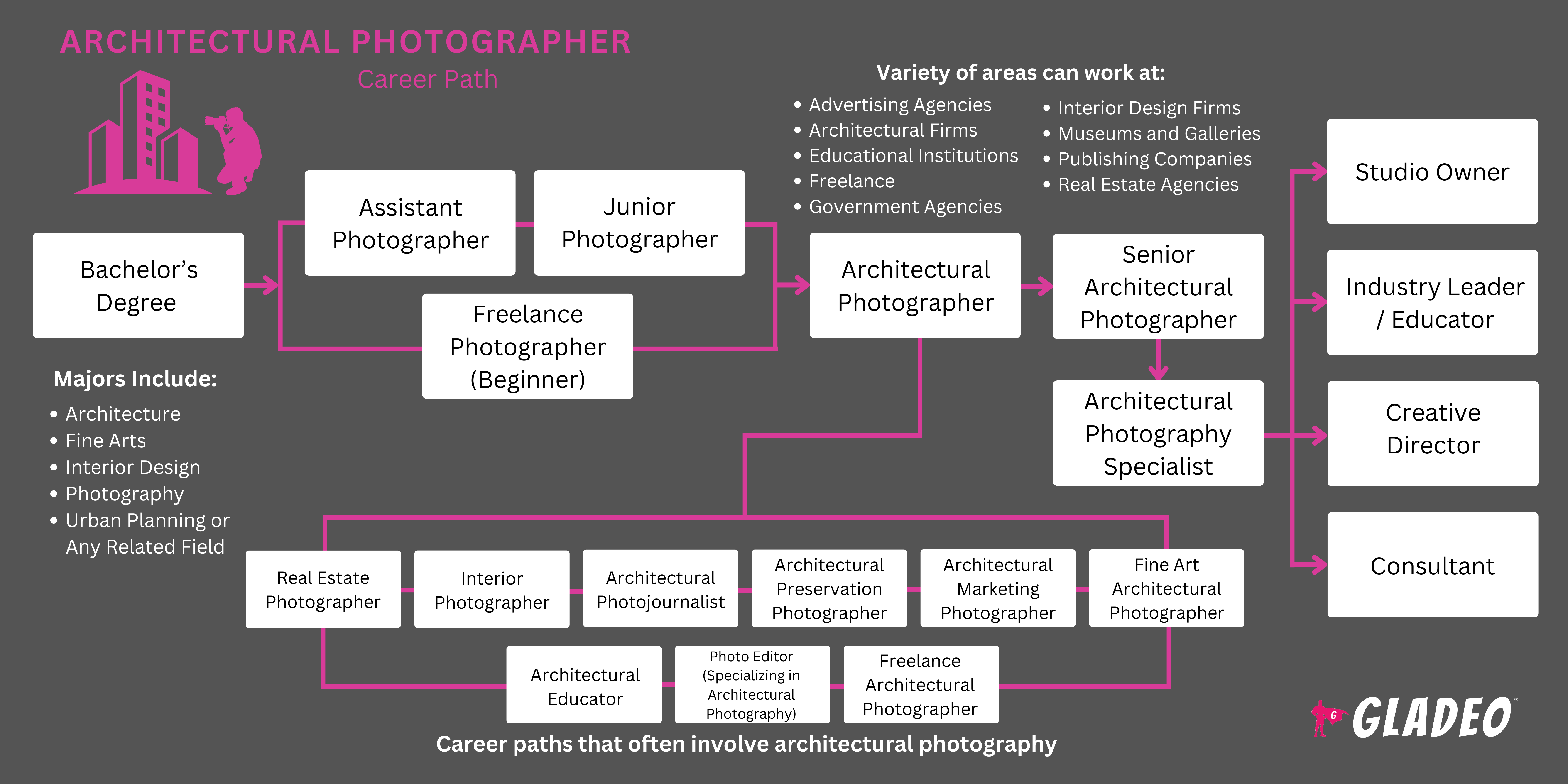
- Crea un buen portafolio que incluya edificios, interiores y detalles arquitectónicos.
- Practica tus habilidades de edición y retoque con programas profesionales.
- Solicita puestos de asistente de fotografía, asistente de estudio o fotógrafo junior.
- Ofrece servicios de fotografía por cuenta propia a pequeñas empresas, diseñadores o agentes inmobiliarios.
- Aprende a utilizar equipos, iluminación y técnicas de cámara que son un referente en el sector.
- Establece contactos con arquitectos, diseñadores de interiores, constructores y promotores inmobiliarios.
- Crea una página web profesional y un portafolio en las redes sociales.
- Realiza prácticas en estudios de fotografía, agencias de marketing o empresas de diseño.
- Asiste a eventos de fotografía, ferias de diseño y talleres creativos.
- Desarrolla sólidas habilidades de comunicación y de atención al cliente.
- Mantente al día sobre la tecnología fotográfica y las tendencias del marketing visual.
- Practica cómo trabajar con plazos y gestionar varios proyectos a la vez.
- Mejora tus técnicas avanzadas de fotografía, edición e iluminación.
- Adquiere conocimientos especializados en fotografía arquitectónica, de interiores, aérea o comercial.
- Invierte en cámaras, drones y herramientas de edición de mayor calidad.
- Establecer relaciones a largo plazo con arquitectos, diseñadores, hoteles y promotores inmobiliarios.
- Amplía tu cartera con proyectos a gran escala o de lujo.
- Aprende habilidades empresariales, de gestión de marca y de gestión de tu actividad como autónomo.
- Realiza cursos o obtén titulaciones en manejo de drones, videografía o edición avanzada.
- Orientar a fotógrafos noveles o a ayudantes.
- Colabora con revistas, agencias de publicidad o clientes internacionales.
- Mantente al día de las últimas tendencias en medios digitales, visitas virtuales y marketing visual.
- Asume puestos de liderazgo en equipos creativos o estudios fotográficos.
- Desarrolla un estilo fotográfico único que ayude a que tu trabajo destaque.
Páginas web:
- ArchDaily
- Dezeen
- Behance
- Escuela de Fotografía Digital
- PetaPixel
- La vida a través de la fotografía
- La Liga de Arquitectura
- Houzz
- Adobe Creative Cloud
- Fotografía de National Geographic
- Fstoppers
- Creative Boom
Libros:
- Fotografía arquitectónica de Adrian Schulz
- «La mirada del fotógrafo », de Michael Freeman
- «Aprender a ver de forma creativa», de Bryan Peterson
- El manual de fotografía de interiores, de Amber Richards
- «Understanding Exposure», de Bryan Peterson
Se necesita mucho para convertirse en fotógrafo de arquitectura, y las habilidades, los conocimientos sobre el equipo y los requisitos del book pueden resultar a veces abrumadores. Si no te apasiona trabajar con cámaras, iluminación y espacios arquitectónicos, quizá sea mejor que explores otras profesiones creativas o visuales. La Oficina de Estadísticas Laborales enumera las siguientes profesiones similares que puedes tener en cuenta:
- Fotógrafo de interiores
- Fotógrafo inmobiliario
- Fotógrafo comercial
- Fotógrafo especializado en drones
- Editor de fotos
- Videógrafo
- Diseñador gráfico
- Diseñador de interiores
- Dibujante técnico de arquitectura
- Director creativo
Sección de noticias

Ofertas de empleo destacadas
Cursos y herramientas en línea
Expectativas salariales anuales
Los nuevos trabajadores empiezan con un sueldo de unos 42 000 dólares. El sueldo medio es de 56 000 dólares al año. Los trabajadores con mucha experiencia pueden llegar a ganar unos 80 000 dólares.
Expectativas salariales anuales
Los nuevos trabajadores empiezan con un sueldo de unos 41 000 dólares. El sueldo medio es de 49 000 dólares al año. Los trabajadores con mucha experiencia pueden llegar a ganar unos 74 000 dólares.
Expectativas salariales anuales
Los nuevos trabajadores empiezan con un sueldo de unos 48 000 dólares. El sueldo medio es de 61 000 dólares al año. Los trabajadores con mucha experiencia pueden llegar a ganar unos 75 000 dólares.