






Focos
Científico especializado en plantas acuáticas, botánico marino, botánico de agua dulce, ecólogo de humedales, ecólogo acuático, hidrobotánico, ficólogo, biólogo especializado en algas, especialista en vegetación acuática, biólogo especializado en plantas marinas, ecólogo de plantas acuáticas, científico medioambiental acuático
Imagina pasear junto a un lago tranquilo o sumergirte bajo la superficie de un estanque de agua dulce, rodeado de vibrantes bosques submarinos de plantas que oxigenan el agua, sirven de hábitat a los peces y mantienen el delicado equilibrio de los ecosistemas acuáticos. Los botánicos acuáticos son los científicos que estudian estas plantas y algas submarinas para proteger y restaurar estos ecosistemas vitales tanto para la fauna silvestre como para las personas.
Los botánicos acuáticos dedican su jornada a recoger muestras de plantas de lagos, ríos y humedales, a analizar la calidad del agua y a estudiar cómo interactúan las plantas acuáticas con su entorno. Colaboran estrechamente con científicos medioambientales, biólogos especializados en fauna silvestre, responsables políticos y grupos conservacionistas para desarrollar estrategias que protejan las plantas acuáticas en peligro de extinción y controlen las especies invasoras. Su trabajo contribuye a garantizar el agua limpia, apoya la pesca y preserva la biodiversidad.
Mediante el uso de herramientas especializadas, como cámaras subacuáticas, microscopios, dispositivos de cartografía por GPS y equipos de laboratorio avanzados, los botánicos acuáticos analizan la genética de las plantas, sus patrones de crecimiento y su impacto medioambiental. Sus investigaciones sirven de base para la elaboración de normativas medioambientales y proyectos de restauración, lo que hace que su papel sea fundamental para salvaguardar los hábitats acuáticos y promover la salud de los cursos de agua para las generaciones futuras.
- Contribuir a la salud y la recuperación de los ecosistemas acuáticos que sustentan una fauna diversa y a las comunidades humanas.
- Descubrir nuevas especies vegetales o revelar importantes relaciones ecológicas bajo el agua.
- Trabajar al aire libre en hermosos entornos naturales, como lagos, ríos y humedales.
- Colaboramos con científicos, defensores del medio ambiente y responsables políticos para lograr un impacto medioambiental real.
Horario de trabajo
Los botánicos acuáticos suelen tener horarios flexibles, pero deben estar preparados para trabajar al aire libre en diversas condiciones meteorológicas, incluso a primera hora de la mañana y los fines de semana, sobre todo durante las temporadas de trabajo de campo. Pueden trabajar para organismos públicos, universidades u organizaciones medioambientales, compaginando la investigación de campo, los análisis de laboratorio y las reuniones. Los plazos para la presentación de propuestas de subvenciones e informes medioambientales pueden suponer períodos de gran actividad, pero gran parte de su trabajo consiste en el estudio y la exploración independientes.
Funciones típicas
- Realizar estudios de campo para recoger muestras de plantas acuáticas y supervisar las poblaciones de estas.
- Analizar la calidad del agua y las condiciones ambientales que afectan a las plantas acuáticas.
- Identificar y clasificar especies de plantas acuáticas mediante microscopios y análisis de ADN.
- Estudia el impacto de las especies invasoras en la vegetación acuática autóctona.
- Elaborar y poner en práctica planes de restauración de los hábitats acuáticos degradados.
- Colaborar con biólogos especializados en fauna silvestre y organismos medioambientales en la gestión de los ecosistemas.
- Elaborar informes científicos, trabajos de investigación y evaluaciones de impacto ambiental.
- Utilizar herramientas SIG y de cartografía para documentar la distribución de las plantas y los cambios en los hábitats.
- Sensibilizar a la ciudadanía y a los responsables políticos sobre la importancia de las plantas acuáticas.
- Supervisar los efectos del cambio climático en los ecosistemas acuáticos.
- Colaborar en la elaboración de políticas para proteger las plantas acuáticas en peligro de extinción.
- Participa en conferencias y talleres para mantenerte al día sobre las últimas investigaciones en botánica acuática.
Responsabilidades adicionales
- Realizar el mantenimiento y la calibración del equipo de laboratorio y de campo.
- Conseguir financiación mediante la redacción de solicitudes de subvención y propuestas de investigación.
- Formar a becarios y estudiantes en técnicas de campo y de laboratorio.
- Asesorar sobre el cumplimiento de la normativa medioambiental y de conservación.
- Colaborar con las comunidades locales para promover la conservación de los hábitats acuáticos.
- Colaborar en proyectos de investigación interdisciplinares relacionados con los ecosistemas acuáticos.
- Publicar los resultados en revistas científicas y presentarlos en congresos especializados.
- Apoyar las evaluaciones de impacto ambiental de los proyectos de desarrollo situados cerca de masas de agua.
La mañana suele comenzar con la revisión de los datos recopilados sobre el terreno o con la planificación de las próximas salidas de campo. Los botánicos acuáticos consultan las previsiones meteorológicas para preparar un muestreo seguro y eficaz, y se coordinan con los miembros del equipo en lo relativo al equipo y a los objetivos de la investigación.
A mediodía nos dirigimos a lagos, ríos o humedales para recoger muestras de plantas, medir los parámetros del agua y observar las características del hábitat. Este trabajo de campo requiere prestar mucha atención a los detalles y, en ocasiones, bucear o utilizar embarcaciones para llegar a la vegetación sumergida.
Las tardes suelen dedicarlas en el laboratorio a analizar muestras con el microscopio, realizar pruebas de ADN e introducir datos en las bases de datos. También se reúnen con sus compañeros para comentar los resultados de la investigación, elaborar informes y planificar actividades de divulgación con el fin de compartir sus conocimientos sobre la conservación de las plantas acuáticas.
Habilidades sociales
- Curiosidad y pasión por la naturaleza y la ciencia
- Atención al detalle a la hora de observar y registrar datos
- Sólidas habilidades de comunicación para redactar y presentar trabajos de investigación
- Resolución de problemas para superar los retos del trabajo de campo
- Colaboración y trabajo en equipo con profesionales de distintos ámbitos
- Paciencia y perseverancia en los estudios a largo plazo
- Capacidad de adaptación a las condiciones ambientales cambiantes
- Pensamiento crítico para el análisis de datos ecológicos complejos
- Capacidades organizativas para gestionar varios proyectos
- Conferencias y actividades de divulgación educativa
- Capacidad para trabajar de forma autónoma durante la investigación de campo
- Gestión y responsabilidad medioambientales
Habilidades técnicas
- Identificación botánica y taxonomía
- Técnicas de microscopía y análisis de laboratorio
- Análisis genético y códigos de barras de ADN
- Métodos de muestreo y análisis de la calidad del agua
- Uso de software de SIG y de teledetección
- Manejo de equipos de campo, incluidas embarcaciones y material de buceo
- Redacción científica y presentación de datos
- Software estadístico para datos ecológicos
- Redacción de solicitudes de subvención y elaboración de propuestas de investigación
- Normativa medioambiental y conocimientos sobre el cumplimiento de la misma
- Botánico especializado en medio acuático de agua dulce: se centra en la flora de ríos, lagos y estanques.
- Botánico marino: Especialista en plantas y algas de los entornos oceánicos.
- Ecólogo especializado en humedales: Estudia las plantas acuáticas de las marismas y los pantanos, fundamentales para la filtración del agua.
- Ficólogo: Se dedica al estudio de las algas, tanto de agua dulce como marinas.
- Especialista en restauración de plantas acuáticas: Trabaja en proyectos destinados a restaurar hábitats de vegetación acuática dañados.
- Especialista en especies acuáticas invasoras: se dedica al control de las plantas no autóctonas que perjudican a los ecosistemas.
- Genetista especializado en plantas acuáticas: Investiga la diversidad genética y el fitomejoramiento para mejorar la conservación.
- Asesor en política medioambiental (plantas acuáticas): Elabora directrices y normativas para proteger la vegetación acuática.
- Empresas de consultoría medioambiental
- Organismos gubernamentales encargados de los recursos naturales
- Universidades e instituciones de investigación
- Organizaciones sin ánimo de lucro dedicadas a la conservación
- Centros de investigación acuática y marina
- Jardines botánicos con programas de plantas acuáticas
- Organismos de control de la calidad del agua
- Empresas de restauración de humedales
- Grupos de gestión de la acuicultura y la pesca
- Organizaciones de defensa del medio ambiente
- Parques nacionales y refugios de vida silvestre
- Organizaciones internacionales de conservación
Los botánicos acuáticos suelen enfrentarse a condiciones de campo exigentes, como trabajar en humedales, en aguas frías o en zonas remotas, lo que requiere resistencia física y conciencia de la seguridad. Compaginar la investigación de campo con el trabajo de laboratorio y las tareas administrativas puede dar lugar a una agenda variada pero ajetreada.
Su trabajo se basa en proyectos, con plazos vinculados a subvenciones medioambientales, publicaciones académicas y revisiones normativas. Esto puede dar lugar a períodos de gran presión, especialmente a la hora de coordinarse con múltiples partes interesadas o de responder a necesidades urgentes en materia de conservación.
Entre los sacrificios que ello conlleva se encuentran los horarios irregulares durante las temporadas críticas de trabajo sobre el terreno y el tiempo que se pasa lejos de casa durante los viajes de investigación prolongados. Sin embargo, para los profesionales apasionados por su trabajo, la oportunidad de contribuir a la conservación de ecosistemas vitales suele compensar con creces estos retos.
- El uso cada vez mayor de drones y robots submarinos para la prospección de plantas.
- Avances en la secuenciación genética para la identificación y conservación de las plantas.
- Cada vez se hace más hincapié en la lucha contra las especies acuáticas invasoras.
- Integración de la teledetección y los SIG para la cartografía de hábitats.
- Estudios sobre el impacto del cambio climático en la distribución de las plantas acuáticas.
- Desarrollo de técnicas de restauración respetuosas con el medio ambiente.
- Colaboración interdisciplinar para una gestión integral de los ecosistemas.
- Ampliación de los proyectos de ciencia ciudadana relacionados con el seguimiento de las plantas acuáticas.
- El uso del análisis de big data en la investigación medioambiental.
- La creciente concienciación de la población sobre la importancia de los humedales y los hábitats acuáticos.
A muchos botánicos acuáticos les encantaba explorar la naturaleza cuando eran niños: hacer senderismo junto a arroyos, recolectar plantas y observar la fauna. A menudo mostraban una gran fascinación por los entornos acuáticos, ya fueran estanques, lagos o charcos de marea, y disfrutaban con actividades prácticas como la jardinería o el cuidado de acuarios.
Su interés precoz por las ferias de ciencias, las clases de biología y los clubes de actividades al aire libre contribuyó a despertar su curiosidad por cómo viven las plantas y los animales en el agua. Su pasión tanto por la ciencia como por la vida al aire libre les llevó, por lo general, a elegir una carrera que combina la investigación con la conservación de la naturaleza.
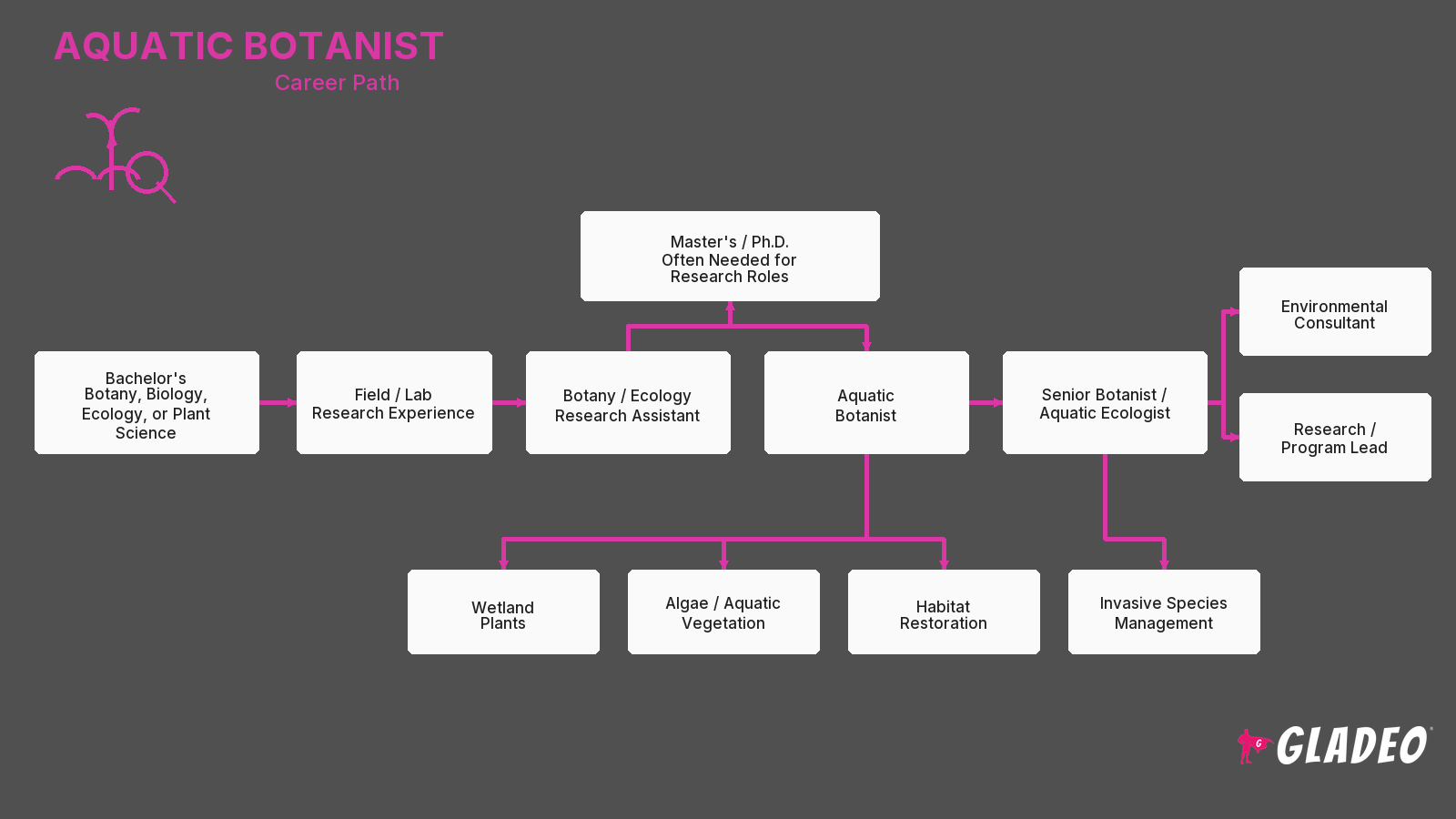
Para convertirse en botánico acuático suele ser necesario contar con una licenciatura en botánica, biología, ciencias ambientales o un campo relacionado. Muchos profesionales cursan estudios de posgrado para especializarse en ecología de las plantas acuáticas, genética o política medioambiental. La experiencia práctica adquirida a través de prácticas y proyectos de investigación es fundamental para desarrollar habilidades prácticas.
Los estudiantes pueden cursar asignaturas relacionadas con temas como:
- Botánica y biología vegetal
- Ecología acuática
- Ciencias ambientales y conservación
- Biología marina
- Análisis de la química y la calidad del agua
- Métodos de campo ecológicos
- Genética y biología molecular
- Ecología y gestión de los humedales
- SIG y teledetección
- Política y normativa medioambiental
Los estudiantes se benefician enormemente de participar en programas de investigación de campo, realizar prácticas en organismos medioambientales y crear un portfolio de estudios sobre identificación de plantas y ecología. La formación en el puesto de trabajo sigue siendo importante, ya que las técnicas y tecnologías evolucionan constantemente en este campo.
- Únete a clubes de ciencias centrados en la biología y la ecología.
- Participa como voluntario en campañas locales de limpieza medioambiental y proyectos de conservación.
- Cursa asignaturas de ciencias avanzadas de biología, química y ciencias ambientales.
- Participa en programas de educación al aire libre y campamentos en la naturaleza.
- Busca prácticas o trabajos de verano en organizaciones medioambientales.
- Desarrollar habilidades en la recopilación de datos y la observación científica.
- Aprende a utilizar programas básicos de SIG y cartografía.
- Crea un portfolio de fotografía de naturaleza e identificación de plantas.
- Asiste a conferencias o talleres sobre ecosistemas acuáticos.
- Ponte en contacto con mentores del ámbito de las ciencias ambientales.
- Descubre los programas universitarios que ofrecen amplias oportunidades de investigación.
- Plantéate estudiar en el extranjero en regiones que cuenten con hábitats acuáticos diversos.
- Busca programas que incluyan una parte importante de investigación de campo.
- Elige centros educativos cuyo profesorado esté especializado en botánica acuática o ecología.
- Busca oportunidades para realizar estudios interdisciplinares en biología y ciencias ambientales.
- Comprueba si hay acceso a ecosistemas acuáticos cercanos para el aprendizaje práctico.
- Da prioridad a los programas que ofrezcan prácticas en organismos públicos o en organizaciones de conservación.
- Ten en cuenta los programas que imparten formación en tecnologías de SIG y teledetección.
- Evaluar la disponibilidad de instalaciones de laboratorio para realizar análisis genéticos y de la calidad del agua.
- Busca colaboraciones con organismos medioambientales para llevar a cabo proyectos prácticos.
- Asegurarse de que el plan de estudios incluya formación sobre la política y la normativa medioambiental vigentes.
- Busca programas que fomenten la publicación y la presentación de trabajos de investigación.
- Da preferencia a los centros educativos que cuenten con clubes o asociaciones medioambientales de alumnos muy activos.
- Comprueba si hay acceso a centros de biología marina o de estudio de humedales.
- Solicita prácticas o puestos de técnico de nivel inicial en organismos medioambientales.
- Participa como voluntario en proyectos de control de la calidad del agua y en estudios sobre la flora.
- Elabora un currículum detallado en el que destaquen tus estudios y tu experiencia profesional.
- Elabora un portafolio en el que se muestren tus habilidades para la identificación de plantas y tus observaciones ecológicas.
- Establece contactos con profesores y profesionales en congresos y seminarios.
- Únete a organizaciones profesionales relacionadas con la botánica y la ecología.
- Desarrollar habilidades en el manejo de datos y el uso de software científico.
- Busca la orientación de botánicos acuáticos con experiencia.
- Prepárate para las entrevistas estudiando los ecosistemas acuáticos locales y las cuestiones relacionadas con la conservación.
- Mantente al día de la normativa medioambiental que afecta a las plantas acuáticas.
- Practica cómo hablar en público para aprovechar las oportunidades de participación en la comunidad.
- Estar dispuesto a trabajar en entornos al aire libre exigentes para adquirir experiencia.
- Cursar estudios de posgrado para especializarse y ampliar las oportunidades de investigación.
- Publica los resultados de las investigaciones en revistas científicas para ganar credibilidad.
- Adquirir conocimientos especializados en análisis genético o en la gestión de especies invasoras.
- Asume funciones de liderazgo en proyectos y equipos de investigación.
- Ampliar la red de contactos profesionales a través de conferencias y talleres.
- Adquiere experiencia en la redacción de solicitudes de subvención y en la gestión de proyectos subvencionados.
- Orientar a los becarios y al personal junior para que desarrollen sus habilidades de liderazgo.
- Mantente al día sobre las nuevas tecnologías y las políticas medioambientales.
Sitios web:
- Sociedad de Ciencias del Agua Dulce (freshwater-science.org)
- Sociedad Americana de Biólogos Vegetales (aspb.org)
- Sociedad Botánica de Estados Unidos (botany.org)
- Sociedad Ecológica de Estados Unidos (esa.org)
- Centro Nacional de Investigación sobre Humedales (usgs.gov/centers/nwrc)
- Sociedad para la Gestión de las Plantas Acuáticas (apms.org)
- Agencia de Protección del Medio Ambiente - Humedales (epa.gov/wetlands)
- Asociación Internacional para la Investigación de los Grandes Lagos (iaglr.org)
- Wetlands International (wetlands.org)
- Asociación de Biología Marina (mba.ac.uk)
- Conservation International (conservation.org)
- Sociedad de Científicos de los Humedales (wetlandsciences.org)
- Administración Nacional Oceánica y Atmosférica - Plantas marinas (noaa.gov)
- Fondo Mundial para la Naturaleza (WWF) - Conservación de las aguas dulces (wwf.org)
Libros:
- Botánica acuática: Plantas y algas en los ecosistemas de agua dulce, de C.D. Cox
- Ecología de las plantas acuáticas: una introducción, de T.J. Barko
- «Plantas de humedales: biología y ecología», de E. Mitsch y J. G. Gosselink
- Algas: Introducción a la ficología, de C. S. Lobban y M. Wynne
- Guía de campo de las plantas acuáticas del Medio Oeste, de G. W. Argus
Si la profesión de botánico acuático no es lo tuyo, hay muchas otras carreras relacionadas que te permiten trabajar con las plantas, el agua y el medio ambiente de formas muy satisfactorias.
- Científico medioambiental
- Biólogo especializado en fauna silvestre
- Biólogo marino
- Científico conservacionista
- Hidrólogo
- Educador ambiental
- Científico agrícola
- Especialista en restauración ecológica
- Especialista en recursos hídricos
- Guardia forestal
Fuente de noticias

Empleos destacados
Cursos y herramientas en línea