







Destacados
Agricultural Scientist, Crop Scientist, Soil Scientist, Plant Scientist, Agronomy Specialist, Agricultural Consultant, Soil Fertility Specialist, Crop Production Manager, Sustainable Agriculture Specialist, Precision Agriculture Analyst, Agroecologist, Farm Advisor
Imagine biting into a juicy, healthy apple or enjoying a bowl of fresh vegetables grown sustainably on a farm. Agronomists work behind the scenes to make sure the food we eat is nutritious, abundant, and grown in ways that protect the environment and support farmers.
Agronomists study crops, soils, and farming practices to improve how plants grow and how farms operate. Each day, they collect soil samples, analyze plant health, design experiments, and collaborate with farmers, researchers, and agricultural companies to develop better crop varieties and sustainable farming methods that increase yields and reduce environmental harm.
Using tools like soil testing kits, GPS technology, data analysis software, and scientific research methods, agronomists help solve real-world problems like drought, pests, and soil degradation. Their work is vital for feeding a growing population while preserving natural resources for future generations.
- Helping farmers grow more food while protecting the environment feels meaningful and impactful.
- Discovering new ways to improve crop health and yields through science is exciting and satisfying.
- Collaborating with diverse teams including farmers, scientists, and policymakers leads to rewarding relationships and shared success.
- Seeing your research turn into practical solutions that support communities and ensure food security is deeply fulfilling.
Horario de trabajo
Agronomists typically work full-time, often during regular business hours, but their schedule can vary based on the season and fieldwork demands. During planting or harvest seasons, they might spend long days outdoors collecting samples or advising farmers. Much of their work involves a mix of office research, laboratory analysis, and time in the field, sometimes in remote or rural locations. Many agronomists work for government agencies, universities, private companies, or directly with farms, balancing independent research with teamwork and communication.
Funciones habituales
- Collect and analyze soil and plant samples to assess nutrient levels and health.
- Design and conduct experiments to test crop varieties and farming techniques.
- Advise farmers on best practices for planting, fertilization, pest control, and irrigation.
- Use GPS and remote sensing technologies to monitor crop growth and soil conditions.
- Develop sustainable farming methods that reduce environmental impact and increase productivity.
- Write technical reports and scientific papers to share research findings.
- Collaborate with agricultural engineers, biologists, and economists to improve farming systems.
- Train farmers and agricultural workers on new techniques and technologies.
- Monitor pest and disease outbreaks and recommend control strategies.
- Stay updated on agricultural regulations, policies, and innovations.
- Assist in developing agricultural policies and programs.
- Evaluate the economic feasibility of agricultural practices and technologies.
Responsabilidades adicionales
- Presentar los resultados de la investigación en congresos y talleres.
- Secure funding through grant writing and proposals.
- Manage laboratory or field research projects, including budgets and personnel.
- Participate in community outreach to promote sustainable agriculture.
- Maintain detailed records of experiments and field observations.
- Mentor students or junior researchers in agronomy.
- Contribute to developing educational materials for farmers and the public.
- Evaluate environmental impact assessments related to agriculture.
Mornings often start with reviewing data collected from the previous day’s fieldwork and planning new sample collection routes. Agronomists check weather forecasts to prepare for outdoor activities and coordinate with farmers or field technicians.
Midday usually involves hands-on fieldwork, such as collecting soil and plant samples, observing crop conditions, and using specialized equipment like GPS devices or drones to gather data. They might also meet with farmers to discuss crop health and provide advice.
Afternoons are dedicated to analyzing collected samples in the lab, entering data into computer systems, and collaborating with research teams or agricultural consultants. They spend time writing reports, preparing presentations, or attending meetings to share insights and plan upcoming projects.
Habilidades interpersonales
- Strong problem-solving abilities to tackle complex agricultural challenges.
- Excellent communication skills for explaining scientific concepts to farmers and stakeholders.
- Attention to detail for accurate data collection and analysis.
- Critical thinking to design effective experiments and interpret results.
- Patience and persistence in long-term research projects.
- Adaptability to work in various environments and changing conditions.
- Teamwork skills to collaborate with diverse professionals.
- Organizational skills for managing multiple projects and data.
- Curiosity and passion for science and the natural world.
- Ability to teach and guide others in best practices.
- Time management to balance fieldwork, lab analysis, and reporting.
- Empathy to understand farmers’ needs and challenges.
Competencias técnicas
- Soil sampling and laboratory analysis techniques.
- Plant physiology and crop science knowledge.
- Data analysis using statistical software (e.g., R, SAS).
- Geographic Information Systems (GIS) and GPS technology.
- Remote sensing and drone operation for crop monitoring.
- Experimental design and scientific research methods.
- Familiarity with agricultural machinery and irrigation systems.
- Use of crop modeling software.
- Knowledge of pest and disease identification and control.
- Understanding of environmental regulations and sustainable practices.
- Crop Scientist: Focuses on developing and improving crop varieties for yield and resistance.
- Soil Scientist: Specializes in soil composition, fertility, and conservation methods.
- Plant Breeder: Works on genetically improving plants for better traits.
- Precision Agriculture Specialist: Uses technology to optimize farm inputs and productivity.
- Sustainable Agriculture Specialist: Develops eco-friendly farming practices.
- Agroecologist: Studies ecological processes applied to agricultural systems.
- Agricultural Consultant: Advises farmers and companies on best practices and technologies.
- Research Agronomist: Conducts scientific studies to advance agricultural knowledge.
- Institutos de investigación agrícola
- Universidades y centros de enseñanza superior
- Departamentos agrícolas del Gobierno
- Private agribusiness companies
- Organizaciones medioambientales
- Cooperativas agrícolas
- Seed and fertilizer companies
- Food production corporations
- Organizaciones sin ánimo de lucro dedicadas a la agricultura sostenible
- Consulting firms specializing in agriculture
- Organismos internacionales de desarrollo
- Soil and water conservation districts
Agronomists often face pressure to produce research results that can improve crop yields and sustainability under tight timelines, especially during critical planting or harvest seasons. Their work can directly impact food security and environmental health, adding a layer of responsibility.
The job requires flexibility in working hours, including early mornings and long days during field seasons. Working outdoors exposes agronomists to varying weather conditions and sometimes physically demanding tasks like soil sampling and crop inspection.
Revision and continuous learning are part of the career since agricultural science evolves with new discoveries and changing climate conditions. Agronomists must stay updated and adapt their recommendations, which can involve ongoing study and professional development.
- Growing use of drones and satellite imagery for precision farming.
- Increased emphasis on sustainable and regenerative agriculture practices.
- Desarrollo de variedades de cultivos resistentes a la sequía y a las plagas.
- Integration of big data and AI in crop management decisions.
- Focus on reducing chemical fertilizer and pesticide use.
- Expansion of vertical and urban farming techniques.
- Una mayor colaboración entre científicos, agricultores y responsables políticos.
- Rising concern about climate change impacts on agriculture.
- Advancements in gene editing and biotechnology for crops.
- Use of mobile apps and digital platforms for farmer education and data collection.
Many agronomists were curious about plants, nature, and how food grows from a young age. They often enjoyed gardening, exploring outdoors, or helping with family farms, sparking an early love for agriculture and science.
They tended to be interested in biology, environmental science, and problem-solving activities during school, showing an early knack for mixing hands-on work with scientific inquiry and teamwork.
To become an agronomist, students typically pursue a bachelor’s degree in agronomy, agricultural science, soil science, or a related field. Advanced positions often require a master’s or doctoral degree, especially for research or teaching roles. Courses combine biology, chemistry, environmental science, and practical agriculture.
Los estudiantes pueden cursar asignaturas relacionadas con temas como:
- Biology and Plant Biology
- Ciencia del suelo y fertilidad
- Química agrícola
- Crop Production and Management
- Ciencias Ambientales
- Estadística y análisis de datos
- Genetics and Plant Breeding
- Pest Management and Plant Pathology
- Sistemas de Información Geográfica (SIG)
- Prácticas de agricultura sostenible
Hands-on experience through internships, research projects, or working on farms is crucial for gaining practical skills. Building a portfolio of fieldwork and research helps when applying for jobs or graduate programs. Many agronomists continue learning on the job to keep up with new technologies and methods.
- Cursa asignaturas de ciencias, como biología, química y ciencias ambientales.
- Participate in agriculture-related clubs such as FFA or 4-H.
- Volunteer or intern at local farms or agricultural research centers.
- Develop strong math skills, especially in statistics.
- Explore computer science or data analysis classes.
- Attend agricultural fairs and workshops to learn about farming technologies.
- Join science fairs with projects related to plants or soil.
- Seek mentorship from agriculture professionals or teachers.
- Build communication skills through presentations and writing.
- Engage in outdoor activities to develop observation skills.
- Look for programs with strong hands-on learning opportunities and fieldwork.
- Choose schools with access to research farms or agricultural labs.
- Ensure curriculum covers modern technologies like GIS and data analysis.
- Check for internships or cooperative education programs.
- Seek programs with faculty who have active research projects.
- Consider schools with partnerships with local farms or agribusinesses.
- Look for courses in sustainability and environmental impact.
- Find programs that teach both traditional and precision agriculture methods.
- Evaluate opportunities for interdisciplinary study in biology, chemistry, and environmental science.
- Verify accreditation and career support services
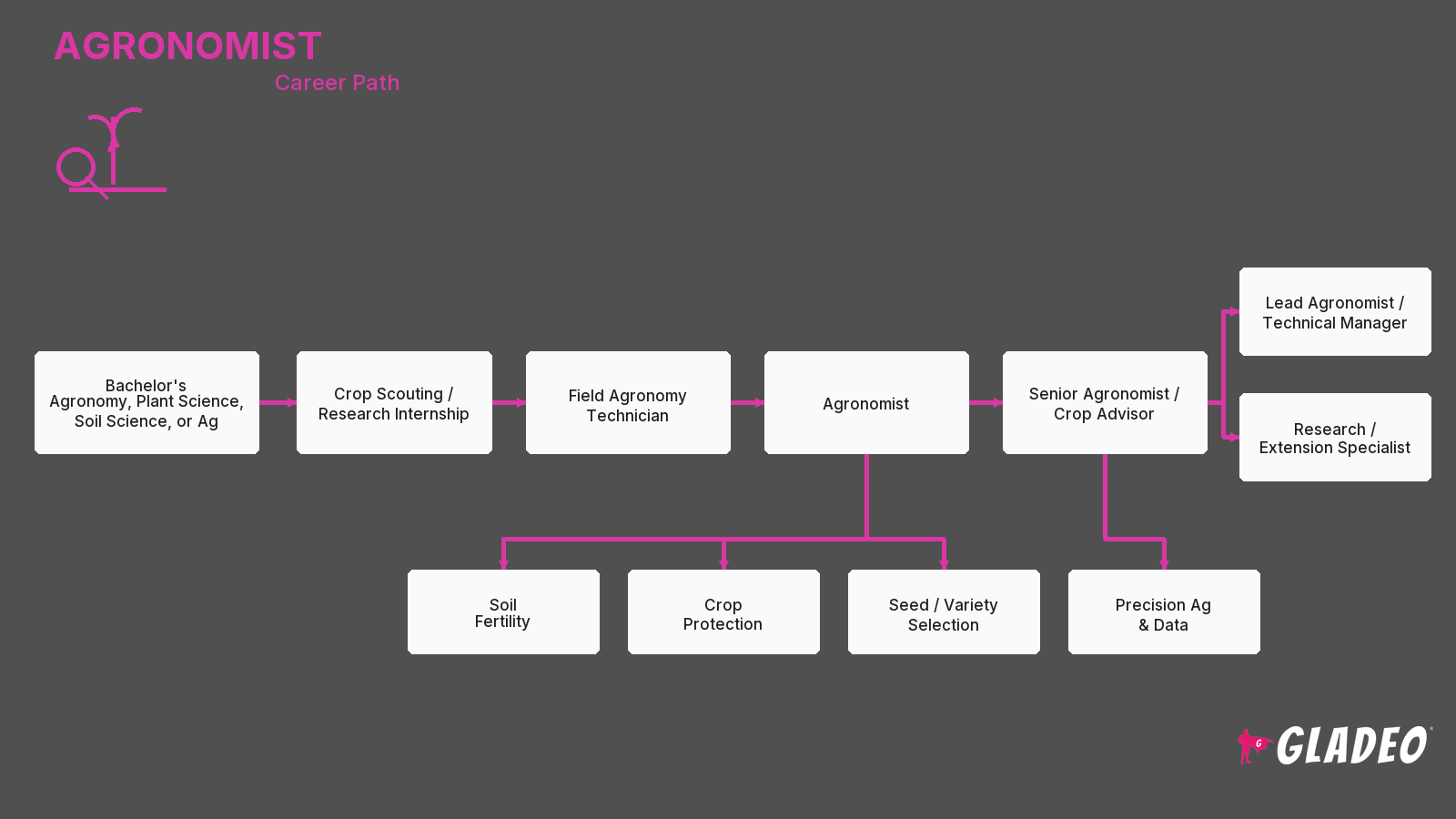
- Apply for internships or assistant roles with agricultural research stations or extension services.
- Volunteer at local farms or agricultural nonprofits to gain experience.
- Build a portfolio documenting fieldwork, experiments, and data analysis.
- Network with university professors and industry professionals.
- Attend agricultural conferences and career fairs.
- Develop a resume highlighting relevant coursework and skills.
- Prepare for interviews by understanding current agricultural challenges.
- Consider roles like research technician, farm advisor assistant, or data analyst.
- Gain certifications in relevant software or technologies.
- Stay open to entry-level positions in related areas like environmental science or biotechnology.
- Use social media and professional platforms to find job openings.
- Keep learning about new farming practices and technologies.
- Gain experience managing research projects and leading teams.
- Pursue advanced degrees to specialize or move into academia.
- Build a strong professional network in agriculture and related industries.
- Publish research and present at conferences to establish expertise.
- Seek leadership roles in agricultural organizations or companies.
- Develop skills in grant writing and project management.
- Mantente al día de las nuevas tecnologías y las prácticas sostenibles.
- Mentor junior agronomists and students to build influence.
Páginas web:
- Sociedad Americana de Agronomía (agronomy.org)
- Sociedad Americana de Ciencias Agrícolas (crops.org)
- Sociedad Americana de Ciencias del Suelo (soils.org)
- Departamento de Agricultura de los Estados Unidos (usda.gov)
- Instituto Nacional de Alimentación y Agricultura (nifa.usda.gov)
- Servicio de Investigación Agrícola (ars.usda.gov)
- International Society of Precision Agriculture (ispag.org)
- Organización de las Naciones Unidas para la Alimentación y la Agricultura (fao.org)
- Fundación Extension (extension.org)
- AgCareers.com (agcareers.com)
- Ag Professional (agprofessional.com)
- Modern Farmer (modernfarmer.com)
- Farm Journal (farmjournal.com)
- Investigación y Educación en Agricultura Sostenible (sare.org)
Libros:
- Introduction to Agronomy: Food, Crops, and Environment by Craig C. Sheaffer and Kristine M. Moncada
- Principles of Agronomy for Sustainable Agriculture by Francisco J. Villalobos and Elias Fereres
- Soil Science and Management by Edward Plaster
- Crop Ecology: Productivity and Management in Agricultural Systems by David J. Connor, Robert S. Loomis, and Kenneth G. Cassman
- Plant Breeding: Principles and Methods by B. D. Singh
If you’re interested in agronomy but want to explore other options, many related careers offer opportunities to work with plants, the environment, or food production.
- Pediatra del suelo
- Fitopatólogo
- Científico medioambiental
- Horticultor
- Ingeniero agrónomo
- Científico especializado en alimentación
- Biotecnólogo
- Responsable de la explotación agrícola
- Especialista en conservación
- Técnico forestal
Sección de noticias

Ofertas de empleo destacadas
Cursos y herramientas en línea